Facts About the Earth – A Brief Description
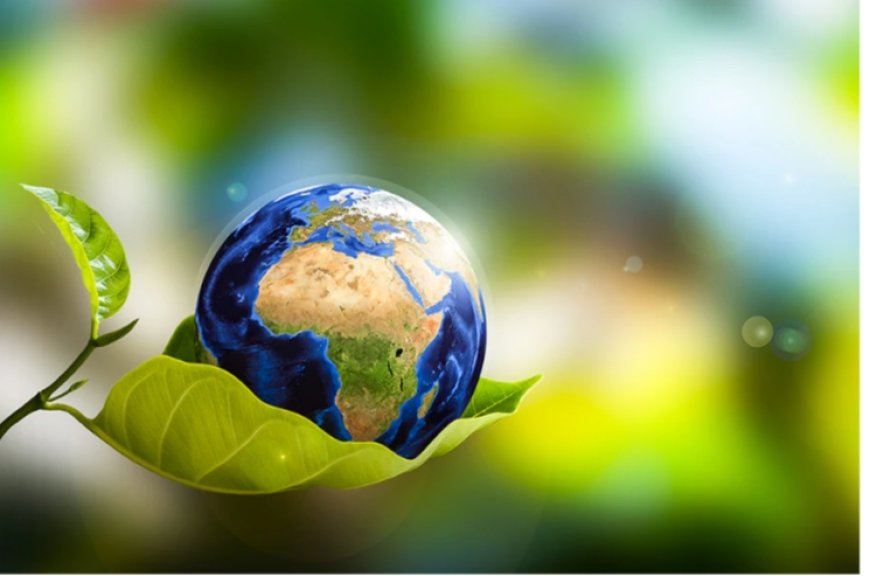
Earth is the only known planet in the universe that supports life. It is our home, a unique and dynamic world filled with diverse ecosystems, climates, and natural processes. From its formation billions of years ago to its current role as a life-supporting planet, Earth is full of fascinating facts that help us understand its importance and complexity.
 Avya7800
1. Basic Information About Earth
Earth is the third planet from the Sun and the fifth-largest planet in the solar system. It has a diameter of about 12,742 kilometers and a circumference of approximately 40,075 kilometers.
Earth is often called the “Blue Planet” because about 71% of its surface is covered with water. The remaining 29% consists of continents and islands. This balance of land and water is essential for supporting life.
2. Formation of Earth
Earth formed around 4.5 billion years ago from a cloud of gas and dust known as the solar nebula. Over time, particles collided and stuck together, forming larger bodies that eventually became planets.
In its early stages, Earth was extremely hot and molten. Gradually, it cooled down, forming a solid crust. Volcanic activity released gases that formed the atmosphere, and water vapor condensed to form oceans.
3. Structure of Earth
Earth has a layered structure consisting of:
a. Crust
The outermost layer where we live. It includes landforms like mountains, plains, and oceans.
b. Mantle
A thick layer of hot, semi-solid rock beneath the crust. It is responsible for tectonic activity.
c. Core
Divided into:
Outer core (liquid)
Inner core (solid)
The movement of molten metals in the outer core generates Earth’s magnetic field.
4. Atmosphere and Air
Earth’s atmosphere is a layer of gases surrounding the planet. It is composed mainly of nitrogen (78%), oxygen (21%), and small amounts of other gases.
The atmosphere:
Provides oxygen for breathing
Protects from harmful solar radiation
Regulates temperature
Supports weather and climate
The ozone layer in the atmosphere blocks harmful ultraviolet rays from the Sun.
5. Water on Earth
Water is one of the most important features of Earth. It exists in three states:
Liquid (oceans, rivers, lakes)
Solid (ice caps, glaciers)
Gas (water vapor)
Oceans contain about 97% of Earth’s water, while only 3% is freshwater. This freshwater is found in rivers, lakes, glaciers, and underground sources.
Water is essential for all living organisms and plays a key role in regulating climate.
6. Earth’s Rotation and Revolution
Earth rotates on its axis and revolves around the Sun.
Rotation: Earth takes about 24 hours to complete one rotation, causing day and night.
Revolution: Earth takes about 365.25 days to orbit the Sun, creating a year.
The tilt of Earth’s axis (about 23.5 degrees) causes different seasons.
7. Gravity
Earth has a strong gravitational force that pulls objects toward its center. Gravity keeps the atmosphere in place and allows living organisms to stay grounded.
It also governs the motion of the Moon and artificial satellites orbiting Earth.
8. The Moon and Its Effects
Earth has one natural satellite, the Moon. It plays an important role in:
Causing ocean tides
Stabilizing Earth’s rotation
Influencing climate
The Moon’s gravitational pull creates high and low tides in oceans, which are important for marine life.
9. Magnetic Field
Earth has a powerful magnetic field generated by its core. This field acts as a shield against harmful solar winds and cosmic radiation.
Without this magnetic field, Earth’s atmosphere could be stripped away, making life impossible.
10. Biodiversity
Earth is home to millions of species of plants, animals, and microorganisms. This diversity of life is known as biodiversity.
Different ecosystems such as forests, deserts, oceans, and grasslands support various forms of life. Biodiversity is essential for ecological balance and survival.
11. Plate Tectonics
Earth’s crust is divided into large pieces called tectonic plates. These plates move slowly over time, causing:
Earthquakes
Volcanic eruptions
Mountain formation
Plate tectonics play a crucial role in shaping Earth’s surface.
12. Climate and Weather
Earth has a dynamic climate system influenced by the Sun, atmosphere, oceans, and landforms.
Weather refers to short-term atmospheric conditions.
Climate refers to long-term patterns.
Different regions of Earth have different climates, such as tropical, desert, and polar climates.
13. Natural Resources
Earth provides a wide range of natural resources essential for human survival:
Water
Minerals
Fossil fuels
Forests
These resources are used for energy, construction, agriculture, and industry.
14. Life-Supporting Conditions
Earth is unique because it has all the conditions necessary for life:
Suitable temperature
Liquid water
Oxygen-rich atmosphere
Protection from radiation
These factors make Earth the only known habitable planet.
15. Earth’s Age and History
Earth is about 4.5 billion years old. Over this long period, it has undergone many changes, including:
Formation of continents
Evolution of life
Mass extinctions
The study of Earth’s history helps scientists understand how life evolved.
16. Continents and Oceans
Earth has seven continents:
Asia
Africa
North America
South America
Antarctica
Europe
Australia
It also has five major oceans:
Pacific Ocean
Atlantic Ocean
Indian Ocean
Southern Ocean
Arctic Ocean
These land and water divisions support diverse ecosystems.
17. Human Impact on Earth
Human activities have significantly affected Earth:
Pollution of air, water, and soil
Deforestation
Climate change
Loss of biodiversity
These impacts threaten the balance of natural systems.
18. Conservation and Sustainability
To protect Earth, it is important to adopt sustainable practices:
Reduce waste and pollution
Conserve water and energy
Protect wildlife and forests
Use renewable energy
Sustainable development ensures that future generations can also benefit from Earth’s resources.
19. Interesting Facts About Earth
Earth is the only planet not named after a god.
It is the densest planet in the solar system.
About 70% of Earth’s oxygen is produced by oceans.
Earth’s atmosphere extends up to about 10,000 km.
The highest point on Earth is Mount Everest, and the deepest point is the Mariana Trench.
20. Importance of Earth
Earth is not just a planet; it is a complete life-support system. It provides:
Food and water
Shelter and resources
Environmental balance
A home for all living beings
Its importance lies in its ability to sustain and nurture life.
Conclusion
Earth is a remarkable planet with unique features that make life possible. From its perfect position in the solar system to its rich biodiversity and protective atmosphere, every aspect of Earth contributes to its role as a life-supporting planet.
Understanding the facts about Earth helps us appreciate its value and importance. However, increasing human activities pose serious threats to its environment. It is our responsibility to protect and preserve Earth for future generations.
In conclusion, Earth is not just our home but a precious and irreplaceable planet that deserves care, respect, and protection. 🌍