
He founded Buddhism, a path of wisdom,
Gautama Buddha, also known as Siddhartha Gautama, was one of the greatest spiritual teachers in human history.
 Avya7800
👶 Early Life of Buddha
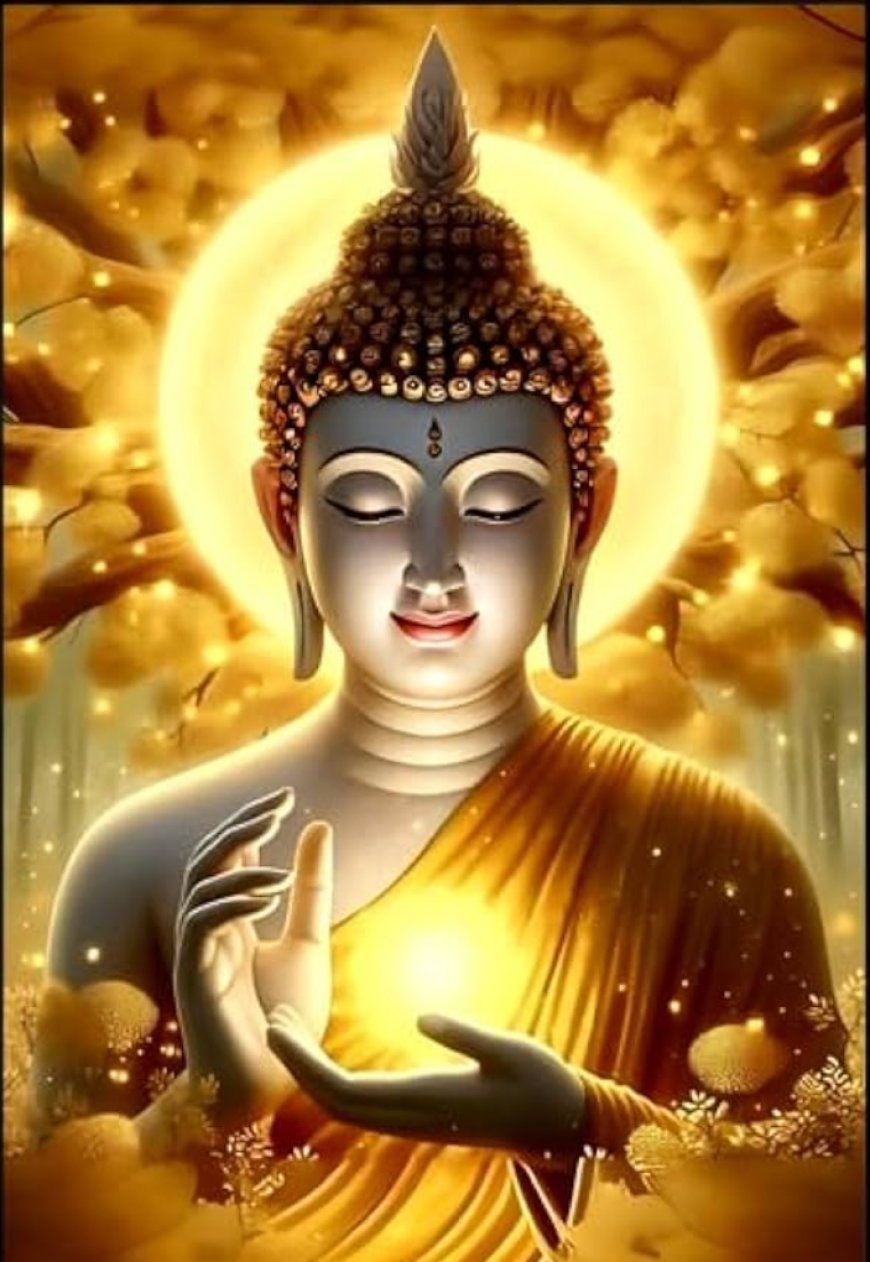
Gautama Buddha was born around 563 BCE in Lumbini (present-day Nepal). His father, King Suddhodana, was the ruler of the Shakya clan, and his mother, Queen Maya, was known for her purity and grace. According to tradition, Queen Maya had a divine dream before his birth, indicating that her son would become either a great king or a great spiritual leader.
The young prince was named Siddhartha, which means “one who achieves his goal.” He was raised in luxury within the palace walls, shielded from the harsh realities of life. His father wanted him to become a powerful king, so he ensured that Siddhartha lived a comfortable and joyful life, away from suffering and sorrow.
💭 The Four Sights
Despite his sheltered upbringing, Siddhartha’s life changed when he ventured outside the palace. During these trips, he encountered what are known as the Four Sights:
An old man
A sick person
A dead body
A wandering monk
These sights deeply disturbed him. He realized that aging, illness, and death are unavoidable aspects of human life. However, the calm and peaceful appearance of the monk inspired him to search for a solution to human suffering.
🏃♂️ The Great Renunciation
At the age of 29, Siddhartha made a life-changing decision. He left his royal life, his wife Yasodhara, and his son Rahula in search of truth. This event is known as the Great Renunciation. He cut off his hair, wore simple clothes, and began living as an ascetic.
He traveled across forests and villages, seeking knowledge from various teachers and practicing extreme austerities. However, after years of hardship, he realized that neither luxury nor extreme self-denial leads to true enlightenment.
🌿 Enlightenment under the Bodhi Tree
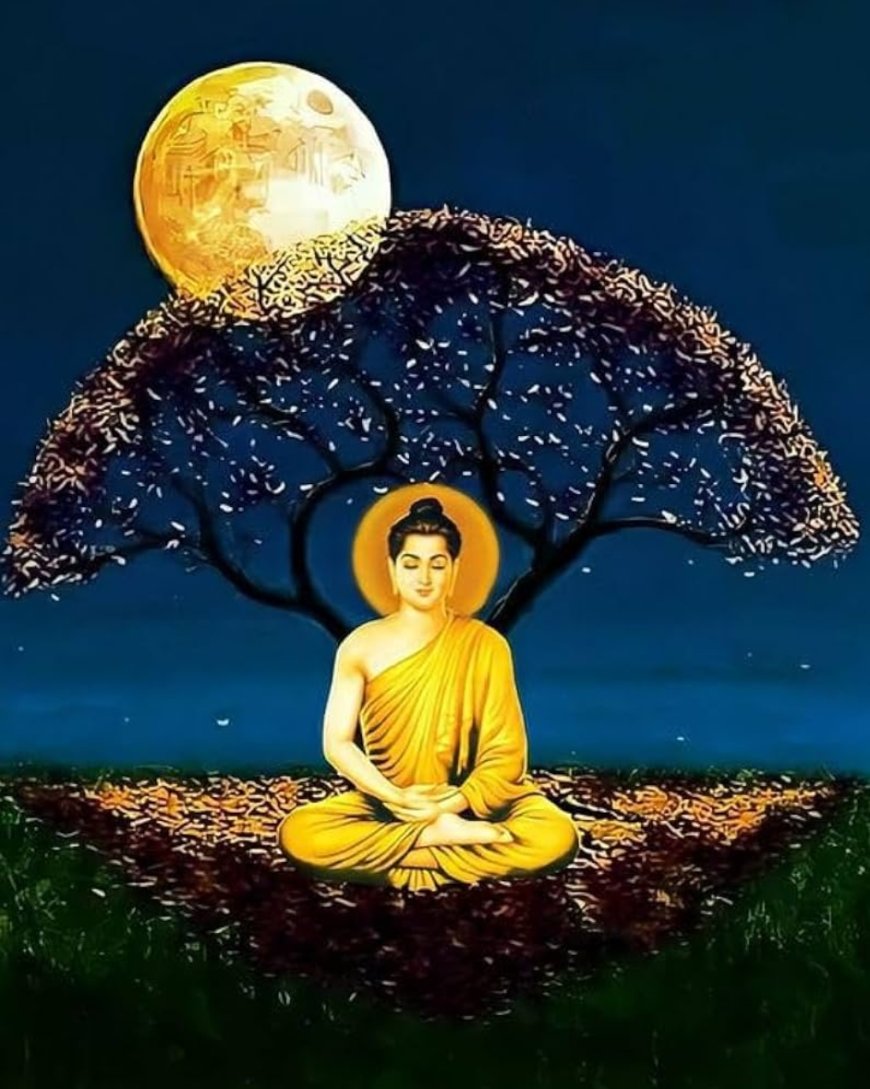
Siddhartha then chose the Middle Path, avoiding both extremes. He meditated deeply under a sacred fig tree in Bodh Gaya, which later became known as the Bodhi Tree. After intense meditation, he attained enlightenment at the age of 35.
At that moment, Siddhartha became the Buddha, meaning “The Enlightened One.” He understood the nature of life, suffering, and the path to liberation.
📖 The Four Noble Truths
The core of Buddha’s teachings lies in the Four Noble Truths, which explain the reality of human suffering:
Dukkha (Suffering): Life involves suffering, pain, and dissatisfaction.
Samudaya (Cause of Suffering): Desire and attachment are the causes of suffering.
Nirodha (End of Suffering): It is possible to end suffering.
Magga (Path to End Suffering): The way to end suffering is through the Eightfold Path.
These truths provide a practical understanding of life and guide individuals toward peace.
🛤️ The Eightfold Path
Buddha taught the Eightfold Path as a guide to ethical living and spiritual growth:
Right Understanding
Right Thought
Right Speech
Right Action
Right Livelihood
Right Effort
Right Mindfulness
Right Concentration
This path helps individuals develop wisdom, moral discipline, and mental clarity.
🧘 Teachings and Philosophy
Buddha’s teachings focus on simplicity, compassion, and mindfulness. Some key concepts include:
Ahimsa (Non-violence): Avoid harming any living being.
Anitya (Impermanence): Everything in life is temporary.
Anatta (No-self): There is no permanent soul or self.
Karma: Actions have consequences.
He encouraged people to think for themselves and not blindly follow traditions.
🌍 Spread of Buddhism
After attaining enlightenment, Buddha spent the rest of his life teaching. His first sermon was delivered at Sarnath, near Varanasi. He attracted followers from all walks of life, including kings, merchants, and ordinary people.
Over time, Buddhism spread across India and later to countries like Sri Lanka, China, Japan, Thailand, and Tibet. Great rulers like Ashoka the Great played a major role in spreading Buddhism.
👥 Disciples and Sangha
Buddha established a community of monks and nuns known as the Sangha. His close disciples, such as Ananda and Sariputta, helped preserve and spread his teachings. The Sangha played an important role in maintaining discipline and sharing knowledge.
🕯️ Death (Mahaparinirvana)
At the age of 80, Buddha passed away in Kushinagar. This event is known as Mahaparinirvana, marking his final liberation from the cycle of birth and death. His teachings, however, continued to live on through his followers.
🌼 Importance of Buddha’s Teachings Today
Buddha’s teachings remain highly relevant in modern times. In a world full of stress and materialism, his message of inner peace, mindfulness, and compassion provides guidance.
Practices like meditation and mindfulness, inspired by Buddhism, are widely used today to improve mental health and well-being.
🪔 Conclusion
Gautama Buddha was not just a religious leader but a guide to humanity. His life teaches us the importance of compassion, wisdom, and self-awareness. By following his teachings, one can overcome suffering and achieve true happiness.