Role of Planets in the Solar System –
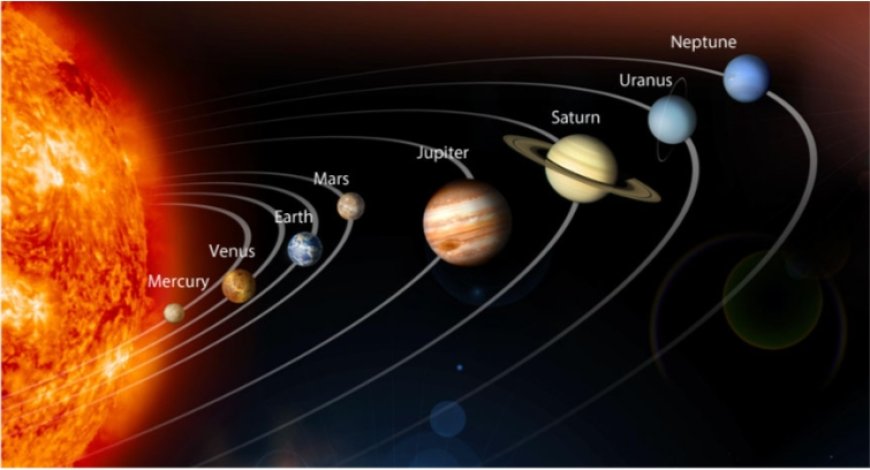
The eight major planets—Mercury, Venus, Earth, Mars, Jupiter, Saturn, Uranus, and Neptune—each have specific roles that influence the solar system in different ways.
 Avya7800
1. Maintaining Gravitational Balance
One of the most important roles of planets is maintaining gravitational balance in the solar system. The Sun has the strongest gravitational pull, keeping all planets in orbit around it. However, planets also exert gravitational forces on each other.
Large planets like Jupiter and Saturn play a major role in stabilizing the orbits of smaller bodies such as asteroids and comets. Their gravity helps prevent chaotic movements and collisions, ensuring the system remains stable over billions of years.
2. Formation and Evolution of the Solar System
Planets are key to understanding how the solar system formed and evolved. Scientists believe that the solar system formed from a giant cloud of gas and dust called a solar nebula.
As this cloud collapsed under gravity, it formed the Sun at the center and planets from the remaining material. Each planet represents a stage of this formation process. For example:
Rocky planets like Mercury, Venus, Earth, and Mars formed closer to the Sun.
Gas giants like Jupiter and Saturn formed farther away, where lighter gases could accumulate.
Thus, planets provide clues about the origin and history of the solar system.
3. Supporting Life
Among all planets, Earth plays a unique role as the only known planet that supports life. It has the right conditions, including:
Liquid water
Suitable temperature
Protective atmosphere
Other planets contribute indirectly to life on Earth. For instance, Jupiter acts like a shield by attracting or deflecting many comets and asteroids that might otherwise collide with Earth.
4. Regulation of Space Environment
Planets help regulate the space environment in the solar system. Their gravitational influence controls the movement of smaller bodies such as asteroids, meteoroids, and comets.
The asteroid belt between Mars and Jupiter is shaped largely by Jupiter’s gravity. Without such regulation, the solar system could be filled with dangerous debris moving unpredictably.
5. Creation of Moons and Rings
Many planets have moons and ring systems, which add to the complexity of the solar system.
Earth has one moon that affects tides and stabilizes its rotation.
Saturn is famous for its beautiful rings made of ice and rock particles.
Jupiter has dozens of moons, including some that may have subsurface oceans.
These moons and rings play roles in gravitational interactions and provide opportunities for scientific exploration.
6. Influencing Climate and Seasons
Planets influence their own climates and, in some cases, affect neighboring bodies. For example:
The tilt of Earth causes seasons.
Mars also experiences seasons due to its axial tilt.
Studying planetary climates helps scientists understand weather patterns, atmospheric changes, and potential habitability.
7. Protection from Cosmic Threats
Some planets act as protectors of the inner solar system. Jupiter, due to its massive size and strong gravity, captures or redirects many comets and asteroids.
This protective role reduces the number of impacts on inner planets like Earth, making it safer for life to develop and evolve.
8. Contribution to Scientific Knowledge
Planets are natural laboratories that help scientists understand physics, chemistry, and geology.
Studying Venus helps us understand greenhouse effects.
Exploring Mars provides clues about past water and possible life.
Observing Neptune and Uranus helps us learn about extreme weather and ice giant composition.
Space missions to planets expand our knowledge and technological capabilities.
9. Maintaining Orbital Harmony
Each planet follows a specific orbit around the Sun. These orbits are arranged in such a way that collisions are rare. This orderly motion is known as orbital harmony.
The gravitational interactions between planets ensure that their paths remain stable. Even small changes can have large effects, so the presence of all planets contributes to the long-term stability of the system.
10. Distribution of Elements and Materials
Planets help distribute elements and materials across the solar system. During the early formation stages, collisions between planetary bodies spread minerals and compounds.
This distribution contributed to the formation of moons, asteroids, and even the conditions necessary for life on Earth.
11. Diversity of Planetary Types
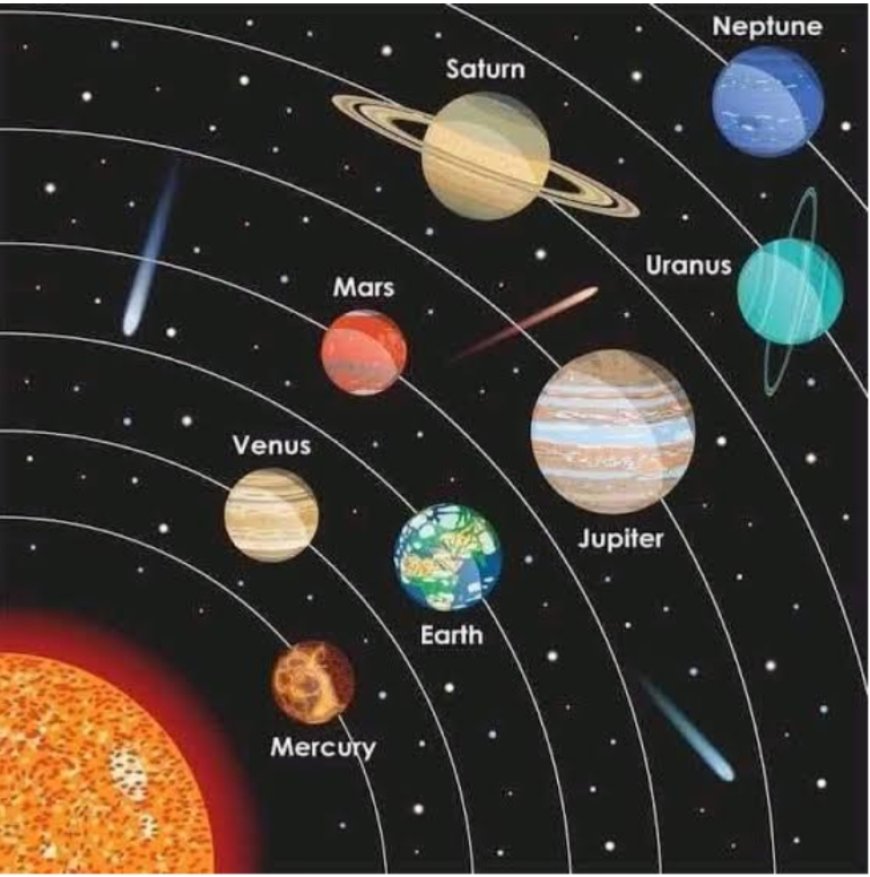
The solar system contains different types of planets:
a. Terrestrial Planets
These are rocky planets:
Mercury
Venus
Earth
Mars
They have solid surfaces and are closer to the Sun.
b. Gas Giants
Jupiter
Saturn
They are made mostly of hydrogen and helium.
c. Ice Giants
Uranus
Neptune
They contain icy materials like water, ammonia, and methane.
This diversity shows how different conditions lead to different planetary structures.
12. Inspiration and Cultural Importance
Planets have inspired human curiosity, mythology, and scientific exploration for centuries. Ancient civilizations observed planets and associated them with gods and celestial events.
Modern astronomy continues to study planets to understand the universe better. Space missions, telescopes, and satellites have made it possible to explore planets in detail.
13. Role in Future Exploration
Planets are key to the future of space exploration. Scientists are exploring:
Colonization possibilities on Mars
Study of atmospheres on Venus
Exploration of moons of Jupiter and Saturn
Understanding planets will help humans expand beyond Earth and explore the universe.
Conclusion
Planets play a vital role in the solar system by maintaining gravitational balance, supporting life, regulating the space environment, and contributing to scientific knowledge. Each planet, from Mercury to Neptune, has a unique function that adds to the stability and complexity of the system.
The solar system is not just a collection of isolated objects but a well-organized and interconnected system where planets play central roles. By studying them, we gain insights into the origin of the universe, the possibility of life beyond Earth, and the future of human exploration.