Unemployment is one of the most serious socio-economic challenges
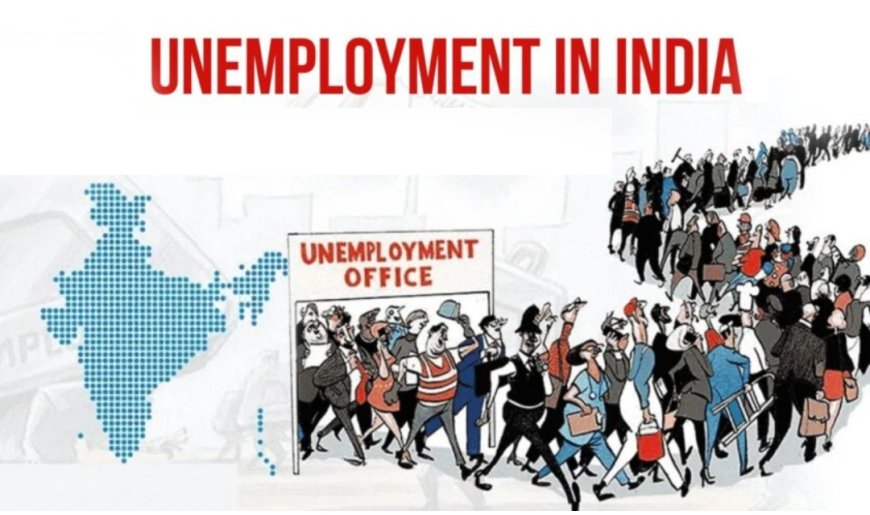
challenges facing India today. It refers to a situation where individuals who are capable of working and actively seeking jobs are unable to find suitable employment. In a country with a population of over 1.4 billion, the issue of unemployment is complex,
 Avya7800
📊 Types of Unemployment in India
Unemployment in India exists in various forms due to its diverse economy.
1. Seasonal Unemployment 🌾
This type occurs mainly in agriculture. Farmers and laborers are employed only during sowing and harvesting seasons, remaining jobless during the rest of the year.
2. Disguised Unemployment 👨🌾
Common in rural areas, where more people are employed than actually needed. For example, five people may work on land that requires only three, meaning two are effectively unemployed.
3. Structural Unemployment 🏭
This arises due to a mismatch between workers’ skills and job requirements. Rapid technological changes often make certain skills obsolete.
4. Frictional Unemployment 🔄
Temporary unemployment occurs when people are transitioning between jobs or entering the workforce.
5. Educated Unemployment 🎓
A major concern in India where educated individuals fail to find suitable jobs due to lack of opportunities or mismatch of skills.
📈 Causes of Unemployment in India
1. Rapid Population Growth 👥
India’s growing population increases the labor force faster than job creation. This puts pressure on available employment opportunities.
2. Dependence on Agriculture 🌱
A large portion of India’s population still depends on agriculture, which:
Provides seasonal employment
Has limited capacity to absorb labor
3. Lack of Industrial Growth 🏭
Although India is developing, industrial growth has not been sufficient to create jobs for millions entering the workforce every year.
4. Skill Gap 🎯
There is a mismatch between education and industry needs. Many graduates lack practical skills required by employers.
5. Technological Advancement 🤖
Automation and digitalization have reduced the need for manual labor in many sectors, leading to job losses in traditional industries.
6. Poor Education System 📚
The education system often focuses more on theory than practical knowledge, resulting in unemployable graduates.
7. Regional Imbalance 🗺️
Some regions are more developed than others, causing uneven job opportunities across states.
📉 Current Scenario of Unemployment
According to data from Centre for Monitoring Indian Economy (CMIE):
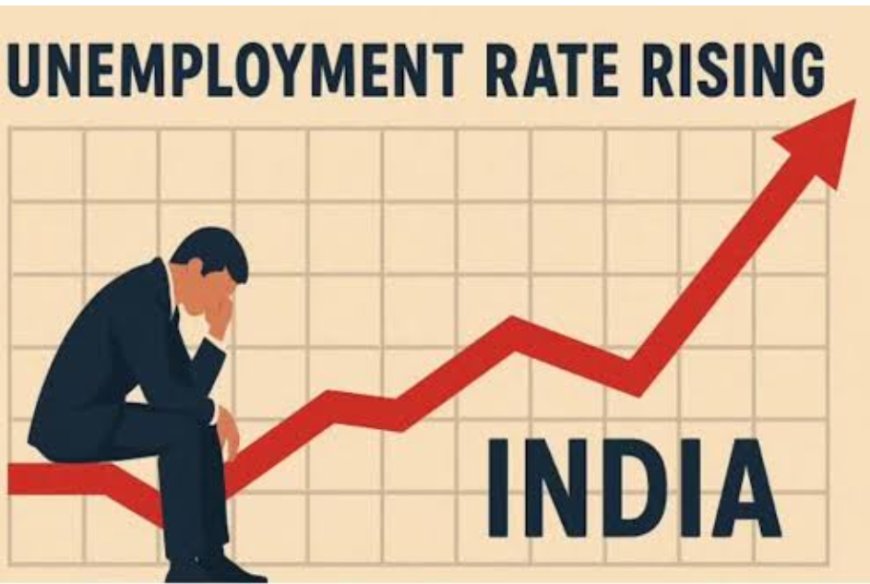
India’s unemployment rate fluctuates between 7% to 9% in recent years
Urban unemployment is higher among educated youth
Rural unemployment is often hidden as disguised unemployment
📊 Youth Unemployment
Youth unemployment is particularly high:
Many graduates struggle to find jobs
Competition for government jobs is intense
Private sector jobs often require experience and skills
🧑🤝🧑 Impact of Unemployment
1. Economic Impact 💰
Loss of productivity
Reduced national income
Increased poverty
2. Social Impact ⚖️
Increase in crime rates
Social unrest
Mental health issues
3. Political Impact 🏛️
Public dissatisfaction
Pressure on government policies
Influence on elections
4. Individual Impact 😔
Loss of self-confidence
Stress and anxiety
Reduced quality of life
🏛️ Government Initiatives to Reduce Unemployment
The Government of India has launched several schemes to tackle unemployment.
1. Mahatma Gandhi National Rural Employment Guarantee Act
Provides 100 days of guaranteed wage employment in rural areas
Helps reduce rural unemployment
Supports infrastructure development
2. Skill India Mission
Focuses on skill development
Aims to make youth employable
Offers vocational training
3. Startup India
Encourages entrepreneurship
Provides funding and support
Promotes innovation
4. Make in India
Boosts manufacturing sector
Aims to create jobs
Attracts foreign investment
5. Pradhan Mantri Kaushal Vikas Yojana
Provides skill training to youth
Certification programs
Industry-relevant skills
🌐 Role of Private Sector
The private sector plays a crucial role in employment generation:
IT companies creating jobs in cities
Startups offering innovative opportunities
Growth in e-commerce and digital services
Cities like Bengaluru and Hyderabad are major employment hubs.
📚 Education and Employment
🎓 Need for Reform
Focus on skill-based learning
Industry collaboration
Internship opportunities
🧠 Digital Education
Online courses and certifications
Growth of ed-tech platforms
Access to global knowledge
🌱 Rural Employment Opportunities
🌾 Agriculture Modernization
Use of technology
Better irrigation systems
Crop diversification
🏡 Rural Industries
Handicrafts
Small-scale industries
Agro-based industries
🚀 Future Prospects
💡 Emerging Sectors
Information Technology
Renewable Energy
Healthcare
Tourism
🤖 Impact of Artificial Intelligence
AI may reduce some jobs but also create new opportunities in:
Data science
Robotics
Cybersecurity
⚖️ Challenges Ahead
Bridging skill gap
Creating sustainable jobs
Managing population growth
Ensuring inclusive development
🌟 Solutions to Reduce Unemployment
✅ 1. Skill Development
Training youth in practical skills
✅ 2. Industrial Growth
Encouraging manufacturing and industries
✅ 3. Entrepreneurship
Promoting startups and self-employment
✅ 4. Education Reform
Aligning education with job market needs
✅ 5. Government Policies
Effective implementation of employment schemes
📌 Conclusion
Unemployment in India is a complex issue that requires a multi-dimensional approach. While the country has immense potential due to its young population, the challenge lies in providing adequate employment opportunities.
With proper planning, skill development, and economic growth, India can turn its unemployment challenge into an opportunity for development. Government initiatives, private sector participation, and education reforms will play a crucial role in shaping the future.
👉 If addressed effectively, unemployment can be reduced, leading to:
Economic growth
Social stability
Improved quality of life