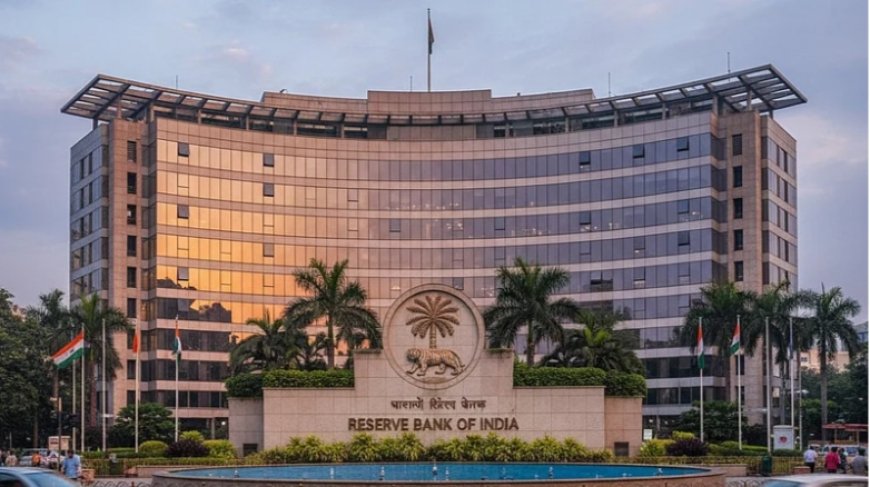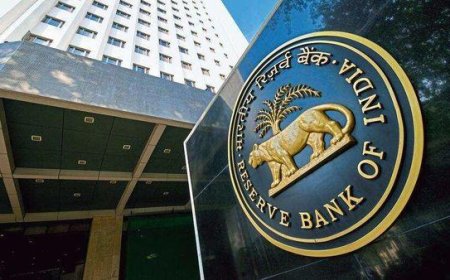
🏦 Reserve Bank of India (RBI) – Detailed Description
🌍 Introduction The Reserve Bank of India (RBI) is the central bank of India, responsible for regulating the country’s monetary and financial system. It plays a crucial role in maintaining economic stability and ensuring the smooth functioning of the banking sector. The RBI controls the supply of money, manages inflation, supervises banks, and acts as the banker to the government. It is one of the most important institutions in India’s economy. 📜 Establishment and History The RBI was established on 1 April 1935 under the RBI Act of 1934. Initially, it was privately owned but was later nationalized in 1949, making it fully owned by the Government of India. The headquarters of RBI is located in Mumbai, which is also the financial hub of the country. Since its establishment, RBI has played a vital role in shaping India’s economic policies and financial development. 🎯 Objectives of RBI The main objectives of the RBI include: Maintaining price stability (controlling inflation) Ensuring financial stability Promoting economic growth Regulating the banking system Managing currency and credit system These objectives help in maintaining a balanced and stable economy. 🏛️ Structure and Organization 👤 Governor The RBI is headed by a Governor, who is appointed by the Government of India. The Governor is the chief executive and decision-maker. 👥 Deputy Governors There are four Deputy Governors who assist the Governor in managing various departments. 🧾 Central Board of Directors The RBI is governed by a Central Board, which includes: Governor Deputy Governors Directors nominated by the government This board is responsible for policy decisions and overall management. 💰 Functions of RBI 1. Issuer of Currency The RBI has the sole authority to issue currency notes in India (except ₹1 note, issued by the Government of India). It ensures: Adequate supply of money Clean and good-quality currency 2. Banker to the Government The RBI acts as the banker, agent, and advisor to the Government of India. It manages: Government accounts Public debt Payments and receipts 3. Banker’s Bank RBI acts as a bank for other banks. Functions include: Maintaining reserves of banks Providing loans during emergencies Acting as a clearinghouse 4. Controller of Credit RBI controls credit in the economy using monetary policy tools. Tools include: Repo rate Reverse repo rate Cash Reserve Ratio (CRR) Statutory Liquidity Ratio (SLR) These tools help regulate money supply and inflation. 5. Custodian of Foreign Exchange RBI manages India’s foreign exchange reserves under the FEMA Act. It ensures: Stability of the Indian currency Smooth international trade 6. Controller and Supervisor of Banks RBI supervises commercial banks and financial institutions. It ensures: Safety of deposits Proper functioning of banks Prevention of fraud 7. Promoter of Financial Development RBI promotes financial inclusion and development. Examples: Encouraging digital payments Supporting rural banking Introducing schemes for economic growth 📊 Monetary Policy of RBI The RBI formulates and implements monetary policy to control inflation and support growth. Monetary Policy Committee (MPC) The MPC is responsible for setting interest rates. Its main goal is to maintain inflation within a target range. 🏦 Role in Financial Stability RBI ensures the stability of the financial system by: Monitoring risks Managing crises Regulating financial institutions During financial crises, RBI takes measures to protect the economy. 💳 Role in Digital Banking RBI promotes digital banking and cashless transactions. Initiatives include: UPI (Unified Payments Interface) Digital wallets Online banking systems These steps have made transactions faster and more secure. 🌐 RBI and Economic Development RBI plays an important role in economic development by: Supporting industries Encouraging investment Promoting exports It also works with institutions like the International Monetary Fund and the World Bank. ⚠️ Challenges Faced by RBI 1. Inflation Control Managing rising prices is a major challenge. 2. Banking Frauds Ensuring safety in the banking system is crucial. 3. Global Economic Changes International events affect India’s economy. 4. Digital Risks Cybersecurity threats are increasing with digital banking. 🔮 Future Role of RBI The RBI is expected to focus on: Digital currency (CBDC) Stronger financial regulation Sustainable economic growth It will continue to play a key role in India’s economic progress. 📌 Conclusion The Reserve Bank of India is the backbone of India’s financial system. From issuing currency and controlling inflation to regulating banks and promoting digital payments, RBI performs multiple important functions. Its role is essential for maintaining economic stability, promoting growth, and ensuring the smooth functioning of the country’s financial system. As India continues to develop, RBI will remain a key institution shaping the nation’s economic future.
 Avya7800
0
1