Geography of Bihar – Detailed Description
Here is a detailed and well-structured description of the Geography of Bihar in simple and informative language.
 Avya7800
Introduction
Bihar is an important state located in the eastern part of India. It is known for its fertile plains, rich river systems, and historical significance. The geography of Bihar plays a vital role in its agriculture, climate, economy, and culture.
Bihar is one of the most densely populated states in India, and its geographical features support a large population.
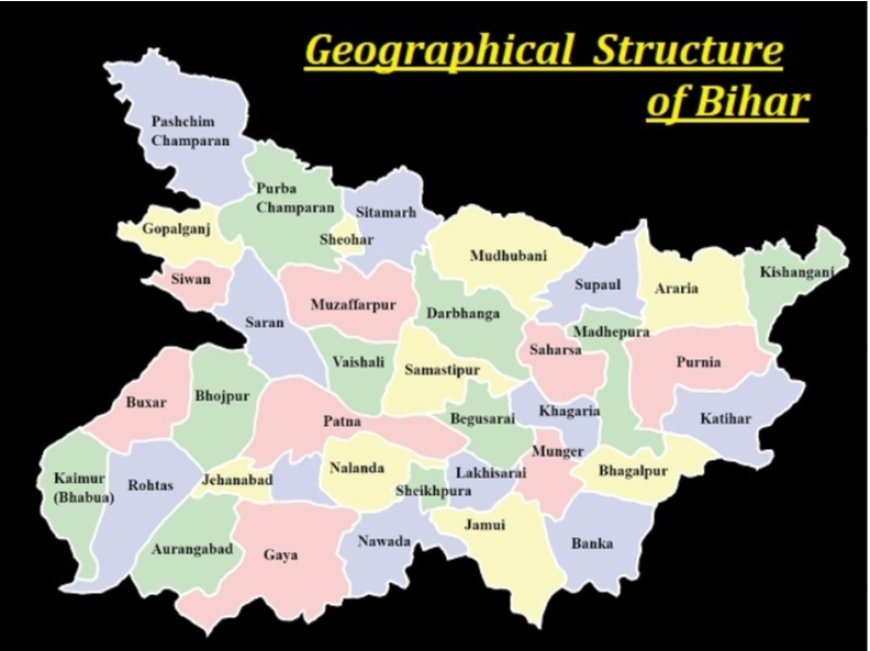
📍 Location and Boundaries
Bihar is situated in eastern India and shares its boundaries with several states and a neighboring country.
Boundaries:
North: Nepal
South: Jharkhand
East: West Bengal
West: Uttar Pradesh
The capital city of Bihar is Patna.
🗺️ Physiographic Divisions
The geography of Bihar can be divided into three main regions:
1. 🌾 Northern Plains
Located north of the Ganga River
Very fertile land
Prone to floods
2. 🌱 Southern Plains
Located south of the Ganga
Slightly higher elevation
Less flood-prone
3. ⛰️ Southern Plateau (Chotanagpur Plateau region)
Partly extends into Bihar
Rocky and mineral-rich
🌊 River System
Rivers are the most important feature of Bihar’s geography.
Major Rivers:
🌊 Ganga River
Lifeline of Bihar
Flows from west to east
🌊 Kosi River
Known as “Sorrow of Bihar” due to floods
🌊 Gandak River
🌊 Bagmati River
🌊 Son River
These rivers provide irrigation but also cause floods.
🌾 Soil and Agriculture
The soil of Bihar is mainly alluvial, which is very fertile.
Types of Soil:
Alluvial soil
Sandy soil
Clay soil
Agriculture:
Main crops: rice, wheat, maize
Cash crops: sugarcane, jute
Agriculture is the backbone of Bihar’s economy.
🌦️ Climate
Bihar has a tropical monsoon climate.
Seasons:
Summer (March–June) – Hot and dry
Monsoon (June–September) – Heavy rainfall
Winter (October–February) – Cool and pleasant
Rainfall is mainly due to the southwest monsoon.
🌿 Natural Vegetation
The natural vegetation of Bihar includes:
Tropical deciduous forests
Grasslands
Riverine vegetation
However, forests cover a small part of the state.
🐾 Wildlife
Bihar has some wildlife areas and sanctuaries.
Example:
Valmiki National Park
Animals:
Tigers
Deer
Leopards
Wildlife conservation is important in the state.
🏞️ Landforms
The landforms of Bihar are mostly plains.
Features:
Flat terrain
Floodplains
River basins
These features make Bihar suitable for farming.
🌊 Floods and Natural Disasters
Flooding is a major issue in Bihar.
Causes:
Overflowing rivers
Heavy rainfall
River course changes
The Kosi River is especially known for causing floods.
🚜 Irrigation and Water Resources
Bihar has many irrigation facilities:
Canals
Tube wells
Rivers
Water resources support agriculture.
🏙️ Urban Geography
Major cities in Bihar include:
Patna
Gaya
Bhagalpur
Urban areas are growing rapidly.
⚠️ Environmental Challenges
Bihar faces several environmental problems:
Flooding
Soil erosion
Deforestation
Pollution
Efforts are needed to protect the environment.
🌱 Economic Importance of Geography
The geography of Bihar supports:
Agriculture
Trade through rivers
Human settlement
However, natural challenges affect development.
🔮 Future Prospects
With proper planning, Bihar can improve its geographical advantages:
Better flood control
Improved irrigation
Sustainable farming
📌 Conclusion
Bihar has a unique geographical structure dominated by fertile plains and rivers like the Ganga River. Its geography plays a crucial role in shaping the state’s agriculture, economy, and lifestyle.
Despite challenges like floods, Bihar’s natural resources make it an important region in India. With proper management and development, the state can achieve significant progress.