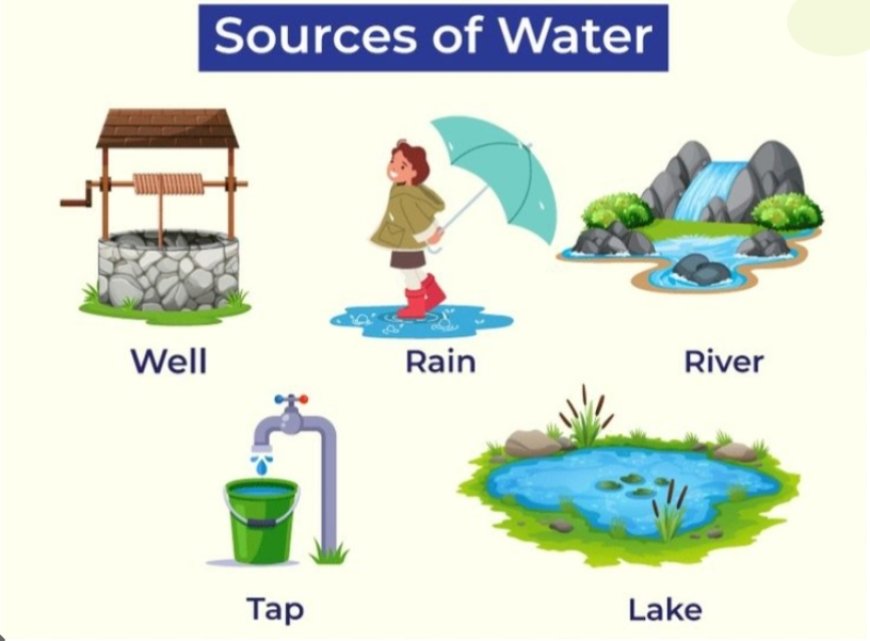
Sources of Water – A Brief Description
Water is one of the most essential natural resources on Earth. It is the foundation of life, supporting ecosystems, agriculture, industry, and human survival. Nearly 71% of the Earth's surface is covered with water, yet only a small fraction of it is available for human use.
 Avya7800
1. Rainwater (Precipitation)
Rainwater is the primary and most fundamental source of all freshwater on Earth. It is formed through the process of evaporation, condensation, and precipitation, which together constitute the water cycle.
When the sun heats water bodies such as oceans, rivers, and lakes, water evaporates into the atmosphere. This water vapor cools and condenses to form clouds. Eventually, when the clouds become heavy, they release water in the form of rain, snow, sleet, or hail.
Rainwater is the purest natural source of water, especially before it comes into contact with pollutants in the atmosphere or on the ground. It replenishes rivers, lakes, groundwater, and supports agriculture. In many regions, rainwater harvesting is practiced to collect and store rainwater for domestic and agricultural use.
2. Surface Water
Surface water refers to water that is found on the Earth's surface. It is one of the most accessible sources of water and includes:
a. Rivers
Rivers are flowing bodies of water that originate from glaciers, rainfall, or springs. They travel across land and eventually empty into seas or oceans. Rivers are a major source of drinking water, irrigation, transportation, and hydroelectric power.
Famous rivers like the Ganga, Yamuna, and Brahmaputra support millions of people. However, pollution and overuse have made many rivers unsafe for direct consumption.
b. Lakes
Lakes are large bodies of still water surrounded by land. They can be freshwater or saltwater. Freshwater lakes are important sources of drinking water, fishing, and recreation.
Some lakes are formed naturally through geological processes, while others are artificial (reservoirs). Lakes also help regulate local climates and support biodiversity.
c. Ponds
Ponds are smaller than lakes and are commonly found in rural areas. They are often used for irrigation, livestock, and sometimes for domestic purposes. Ponds also play a role in groundwater recharge.
d. Reservoirs
Reservoirs are artificial water bodies created by constructing dams across rivers. They store water for irrigation, drinking, and electricity generation. Reservoirs ensure water availability even during dry seasons.
3. Groundwater
Groundwater is water that is found beneath the Earth's surface in soil and rock formations. It is stored in aquifers, which are underground layers of water-bearing materials like sand, gravel, or rock.
Groundwater is accessed through wells, tube wells, and hand pumps. It is one of the most reliable sources of water, especially in areas where surface water is scarce.
Importance of Groundwater
Provides drinking water for rural and urban populations
Supports agriculture through irrigation
Maintains river flow during dry periods
However, excessive extraction of groundwater can lead to depletion, land subsidence, and water quality issues such as contamination with arsenic or fluoride.
4. Glaciers and Ice Caps
Glaciers and ice caps are large masses of ice found in polar regions and high mountains. They store about 69% of the world's freshwater.
When glaciers melt, they release water that feeds rivers and streams. This meltwater is crucial for regions that depend on seasonal water supply, especially during summer.
For example, Himalayan glaciers are the source of many major rivers in India. Climate change, however, is causing glaciers to melt at an alarming rate, threatening long-term water availability.
5. Oceans and Seas
Oceans and seas contain about 97% of the Earth's total water. However, this water is saline (salty) and not directly suitable for drinking or agriculture.
Through desalination processes, salt can be removed to make water usable. Countries with limited freshwater resources, such as those in the Middle East, rely heavily on desalinated water.
Oceans also play a critical role in the water cycle by providing the majority of water vapor for precipitation.
6. Springs
Springs occur when groundwater naturally flows to the surface through cracks or openings in the Earth. They are often found in hilly or mountainous regions.
Spring water is usually clean and safe for drinking, as it has been naturally filtered through soil and rocks. Many communities rely on springs as their primary source of water.
7. Atmospheric Water
Water is also present in the atmosphere in the form of water vapor. Though not a direct source for consumption, it plays a vital role in weather patterns and precipitation.
Modern technologies are being developed to extract water from air, especially in arid regions. Devices called atmospheric water generators can condense moisture from the air to produce drinking water.
8. Artificial Sources of Water
Apart from natural sources, humans have developed artificial systems to store and supply water. These include:
a. Dams
Dams are constructed across rivers to store water and control its flow. They create reservoirs that provide water for irrigation, drinking, and hydroelectric power.
b. Canals
Canals are man-made channels used to transport water from one place to another, mainly for irrigation. They help distribute water to areas that do not have direct access to rivers.
c. Water Tanks and Storage Systems
In urban areas, water is stored in tanks and distributed through pipelines. Rainwater harvesting systems also store water for later use.
9. Desalinated Water
Desalination is the process of removing salt and impurities from seawater. This technology is increasingly used in water-scarce regions.
Although effective, desalination is expensive and energy-intensive, making it less accessible for developing countries.
10. Recycled and Reused Water
Water recycling involves treating wastewater so it can be reused for various purposes such as irrigation, industrial use, and even drinking after advanced treatment.
This is an important method for conserving water, especially in areas facing water shortages. Wastewater treatment plants play a key role in this process.
Importance of Water Sources
All sources of water are interconnected through the water cycle. They support life, agriculture, industries, and ecosystems. Without these sources, life on Earth would not be possible.
Key Roles:
Drinking and domestic use
Agriculture and food production
Industrial processes
Power generation
Environmental sustainability
Challenges Facing Water Sources
Despite the abundance of water, several challenges threaten its availability:
1. Pollution
Industrial waste, sewage, and chemicals contaminate rivers, lakes, and groundwater.
2. Overuse
Excessive extraction of groundwater and overuse of surface water lead to depletion.
3. Climate Change
Changes in weather patterns affect rainfall, glacier melting, and water availability.
4. Population Growth
Increasing population puts more pressure on water resources.
5. Poor Management
Lack of proper planning and conservation leads to wastage and scarcity.
Conservation of Water Sources
To ensure sustainable water supply, it is essential to conserve and manage water resources effectively.
Methods of Conservation:
Rainwater harvesting
Reducing water wastage
Protecting water bodies from pollution
Efficient irrigation techniques like drip irrigation
Recycling and reuse of water
Public awareness and education
Conclusion
Water is a precious and finite resource that sustains all forms of life. Its sources, whether natural like rivers and groundwater or artificial like dams and reservoirs, are vital for human survival and environmental balance. However, increasing demand, pollution, and climate change pose serious threats to these sources.
It is our responsibility to protect and conserve water resources for present and future generations. By understanding the different sources of water and adopting sustainable practices, we can ensure that this essential resource remains available for all.