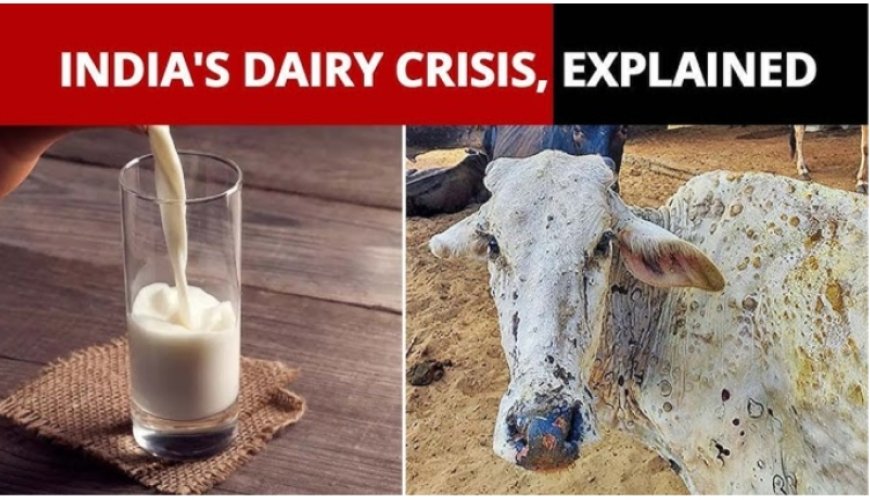
🥛 India’s Dairy Crisis – Detailed Description
Here is a detailed and well-structured description of India’s dairy crisis in simple and informative language.
 Avya7800
Introduction
The dairy sector is one of the most important parts of the economy of India. India is the largest producer of milk in the world, and millions of farmers depend on dairy farming for their livelihood. Milk is not only a staple food but also a key source of nutrition for the population.
However, despite its success, India is currently facing a dairy crisis due to multiple economic, environmental, and structural challenges. This crisis affects farmers, consumers, and the overall economy.
🐄 Importance of the Dairy Sector
The dairy industry plays a vital role in India.
Key Contributions:
Provides employment to millions of farmers
Supports rural economy
Supplies essential nutrition
Contributes significantly to GDP
Organizations like National Dairy Development Board have helped develop the sector.
📉 What is the Dairy Crisis?
The dairy crisis refers to the difficulties faced by the dairy sector, including:
Rising production costs
Falling profit margins
Decreasing demand in some areas
Supply chain disruptions
These issues make it difficult for farmers to sustain their livelihoods.
💰 Rising Cost of Production
One of the biggest problems is increasing costs.
Reasons:
Expensive cattle feed
Rising fuel prices
Veterinary expenses
Farmers struggle to maintain profitability.
🌾 Shortage of Fodder
Fodder (animal feed) is essential for milk production.
Problems:
Lack of grazing land
Poor quality feed
Climate change affecting crops
This leads to reduced milk yield.
🌡️ Impact of Climate Change
Climate change has a direct impact on dairy farming.
Effects:
Heat stress on animals
Reduced productivity
Water scarcity
Extreme weather conditions affect both animals and farmers.
📦 Supply Chain Issues
The dairy sector depends on efficient supply chains.
Problems:
Transportation delays
Lack of cold storage
Milk spoilage
These issues reduce profits and increase losses.
🏭 Competition from Private Companies
Private dairy companies are increasing competition.
Challenges:
Price pressure on farmers
Unequal bargaining power
Market dominance by big companies
Small farmers often suffer the most.
🧴 Demand and Consumption Changes
Changing lifestyles affect dairy consumption.
Trends:
Increasing use of alternatives like plant-based milk
Urban consumers shifting preferences
This affects traditional dairy demand.
⚠️ Adulteration and Quality Issues
Milk adulteration is a serious problem.
Causes:
Profit motives
Lack of strict monitoring
Effects:
Health risks
Loss of consumer trust
🏥 Animal Health Problems
Cattle health is crucial for dairy production.
Issues:
Diseases
Lack of veterinary services
Poor nutrition
Unhealthy animals produce less milk.
👨🌾 Farmer Distress
Farmers face many hardships.
Problems:
Low income
Debt burden
Lack of support
This leads to financial stress and uncertainty.
🏛️ Government Policies
Government plays an important role.
Challenges:
Inconsistent policies
Lack of subsidies in some areas
Implementation gaps
Proper policies are needed for stability.
🌱 Environmental Concerns
Dairy farming impacts the environment.
Issues:
Methane emissions
Water usage
Waste management
Sustainable practices are required.
📊 Role of Technology
Technology can help solve many problems.
Solutions:
Modern dairy equipment
Digital supply chains
Animal health monitoring
Adoption of technology is still limited.
🤝 Cooperative Model
India’s dairy success is based on cooperatives.
Example:
Amul
Benefits:
Fair pricing for farmers
Collective strength
However, not all regions benefit equally.
🌟 Possible Solutions
1. 💰 Financial Support
Subsidies for farmers
Easy loans
2. 🌾 Better Fodder Management
Improve feed quality
Promote fodder farming
3. 🏥 Veterinary Services
Regular health check-ups
Disease control
4. 🧊 Cold Storage and Infrastructure
Improve storage facilities
Reduce wastage
5. 📢 Awareness and Training
Educate farmers
Promote best practices
6. 🌱 Sustainable Practices
Eco-friendly dairy farming
Efficient resource use
🔮 Future Outlook
The future of India’s dairy sector depends on:
Policy reforms
Technological adoption
Sustainable practices
With proper planning, the crisis can be managed effectively.
📌 Conclusion
The dairy sector in India is a backbone of the rural economy, but it is currently facing serious challenges. Rising costs, climate change, supply chain issues, and farmer distress have created a complex crisis.
However, with strong government support, better infrastructure, and modern technology, the dairy sector can overcome these challenges. Protecting farmers and ensuring sustainable growth is essential for the future of India’s dairy industry.