Jharkhand Student Protest: Ranchi Demonstration Over Job Demands Draws National Attention
Jharkhand Student Protest: Ranchi Demonstration Over Job Demands Draws National Attention
 Madhavisanvi
Jharkhand Student Protest: Ranchi Demonstration Over Job Demands Draws National Attention
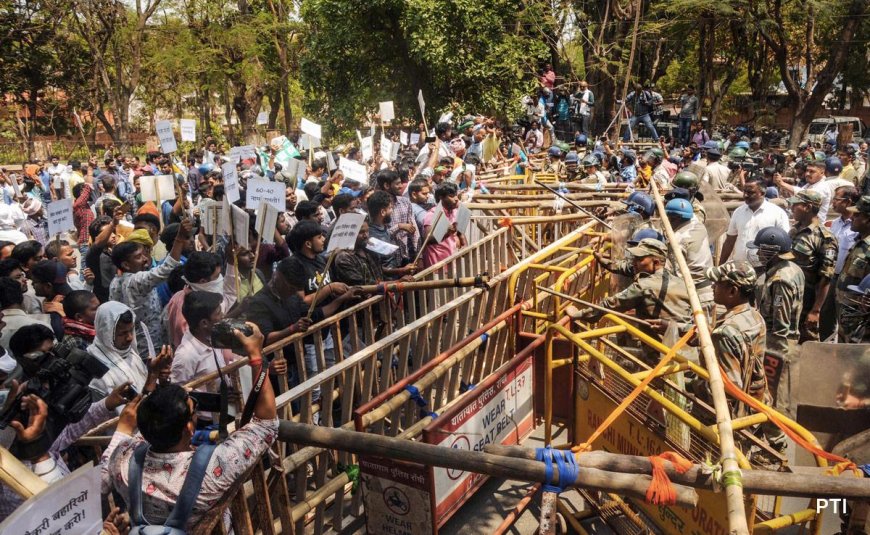
A student protest in Ranchi, Jharkhand, over job-related demands has emerged as an important political and social issue, drawing attention to concerns surrounding employment opportunities, recruitment processes and the treatment of young protesters.
The demonstration brought students and job aspirants together to raise their concerns over employment-related issues. For many young people in Jharkhand, government recruitment is an important source of stable employment, making delays, vacancies, examination procedures and recruitment policies highly sensitive issues.
Police examine CCTV footage
Following the demonstration, police said they would examine CCTV footage to identify individuals who allegedly disrupted the protest or were involved in incidents of disorder. Authorities have indicated that the footage will be used to establish what happened during the demonstration and determine whether specific individuals violated the law.
The use of CCTV footage is significant because it can provide investigators with visual evidence of events during a crowded protest. Authorities may use such material to identify people accused of damaging property, obstructing public movement or engaging in other unlawful activities.
At the same time, the police response has become part of the wider debate. Officials have defended their actions, describing the force used during the incident as “minimum force.” Authorities have argued that maintaining public order and preventing the situation from escalating was necessary.
Students raise employment concerns
The protest reflects wider concerns among young people about employment opportunities in Jharkhand. Students and job aspirants frequently depend on government recruitment examinations and public-sector vacancies, particularly in a state where competition for secure employment can be intense.
Recruitment-related protests can emerge when students believe that examinations have been delayed, recruitment processes are not moving quickly enough, vacancies are insufficient, or administrative decisions could affect their opportunities.
For protesters, demonstrations are a way to bring these concerns directly before the government and demand clear timelines and action.
Debate over police action
The police response has also become an important part of the controversy. Supporters of the authorities argue that police must maintain law and order when demonstrations become disruptive. From this perspective, officials have a responsibility to ensure that public roads, government buildings and other public spaces remain accessible.
However, student groups and political opponents may question whether the police response was proportionate. They may seek greater transparency regarding how the situation developed and whether force was necessary.
The decision to examine CCTV footage could therefore play an important role in determining the sequence of events and establishing individual responsibility.
Political significance
The Ranchi protest has also attracted political attention because employment and recruitment are major issues for young voters. Political parties often use student and youth employment concerns to question governments over job creation, recruitment transparency and implementation of promises.
The incident could therefore become part of a broader political discussion about employment policy in Jharkhand, particularly if student organisations continue their demonstrations.
What happens next?
The immediate focus is likely to remain on the police investigation, examination of CCTV footage and any action taken against people identified as having disrupted the demonstration.
At the same time, the government may face pressure from students to address the underlying employment-related demands that led to the protest in the first place. A long-term solution will depend not only on maintaining law and order during demonstrations but also on addressing concerns about recruitment, vacancies, examinations and employment opportunities.
The Ranchi incident highlights a broader issue facing many Indian states: young people are increasingly demanding greater transparency, faster recruitment and more employment opportunities. How the authorities respond to these demands could determine whether the current tensions ease or lead to further demonstrations.