Supreme Court to Hear PIL on Odisha DGP Appointment Process
Supreme Court to Hear PIL on Odisha DGP Appointment Process
 Madhavisanvi
Supreme Court to Hear PIL on Odisha DGP Appointment Process
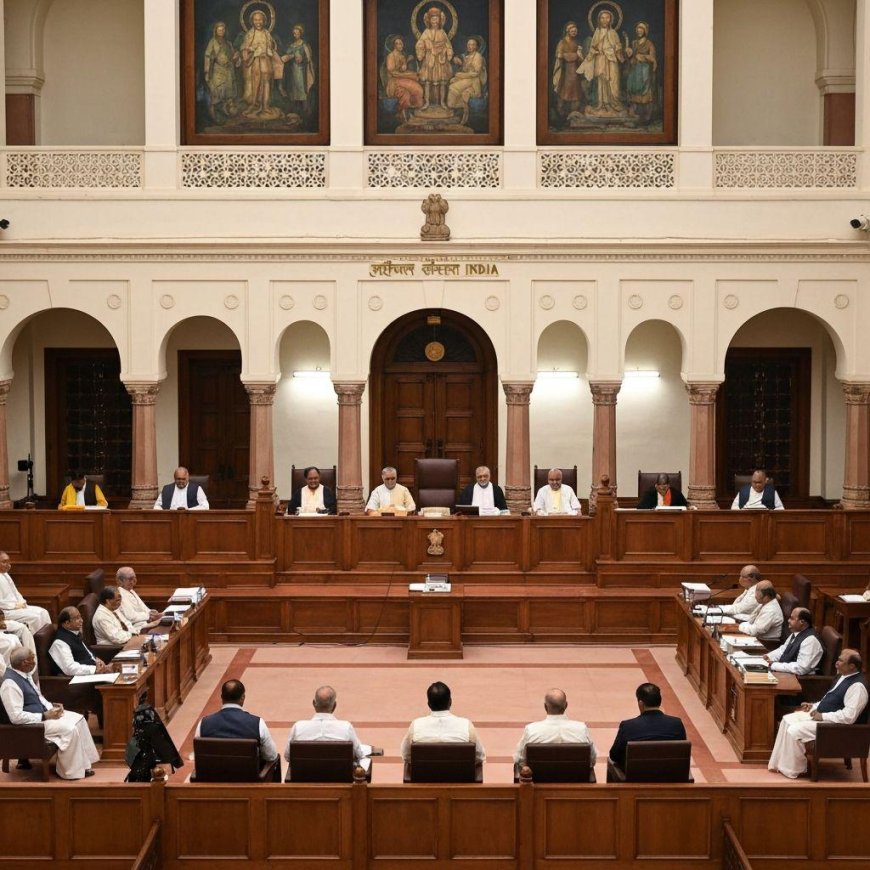
The Supreme Court of India is scheduled to hear today, August 12, 2026, a Public Interest Litigation (PIL) challenging the procedure being followed for the appointment of Odisha's next Director General of Police (DGP). The petition alleges that the state government's approach may not comply with the Supreme Court's established guidelines governing the selection of state police chiefs.
The matter has attracted attention because the DGP is the highest-ranking police officer in the state, and the appointment process is expected to follow a clearly defined procedure intended to protect transparency, merit and institutional independence.
⚖️ What is the dispute about?
According to reports, the petition challenges the process through which Odisha is preparing a list of eligible officers for consideration for the DGP post.
The petitioner has alleged that the state had earlier sent a panel of officers to the Union Public Service Commission (UPSC) but subsequently withdrew that panel. The petition further alleges that the government was attempting to promote an Additional Director General of Police (ADGP) to the DGP rank and then include that officer in a fresh panel sent to the UPSC.
The Supreme Court has agreed to hear the matter urgently. Senior advocate P. Chidambaram raised the issue before a bench headed by Chief Justice of India Surya Kant, along with Justices Joymalya Bagchi and V. Mohana.
📜 Why are Supreme Court guidelines important?
The controversy is connected to the Supreme Court's directions concerning the appointment of state police chiefs, particularly the principles established in the Prakash Singh case.
The framework requires states to follow a prescribed procedure rather than making a DGP appointment entirely at their discretion. Under the process, the UPSC prepares a panel of eligible officers, after which the state government selects the DGP from among the officers on that panel. The Supreme Court reiterated the importance of following this procedure in February 2026.
The purpose of such guidelines is to ensure that the appointment of the state's top police officer is based on established eligibility criteria and a transparent selection process.
Why the case matters for Odisha
The case is significant because the DGP heads the entire Odisha Police organisation. The person appointed to the post is responsible for providing overall leadership and direction to the state's policing and law-and-order machinery.
A dispute over the appointment procedure therefore goes beyond the question of an individual officer. It raises broader questions about administrative transparency, compliance with judicial directions and the independence of the police leadership.
The Supreme Court's decision or observations could influence how Odisha proceeds with the appointment and could also clarify how the applicable guidelines should be interpreted in similar situations.
Current transition in police leadership
The legal challenge comes at a time when Odisha is preparing for a change at the top of its police administration. Reports say the tenure of incumbent DGP Y. B. Khurania is due to end on August 16, adding urgency to the selection process.
The state therefore needs to complete the selection process while also ensuring that it remains consistent with the applicable legal framework.
What will the Supreme Court examine?
The court may examine several questions surrounding the selection process, including:
-
Whether the state followed the prescribed procedure for selecting eligible DGP candidates.
-
Whether the panel sent to the UPSC was properly constituted.
-
Why the earlier panel was withdrawn.
-
Whether an officer promoted from ADGP to DGP rank can be included in the fresh selection process under the applicable rules.
-
Whether the process complies with the Supreme Court's directions in the Prakash Singh case.
-
Whether the appointment procedure maintains transparency and fairness.
At this stage, these are allegations raised in the petition, not findings by the Supreme Court. The court's hearing will be important in determining how the legal issues are addressed.
Role of the UPSC
The UPSC has an important role in the established DGP-selection mechanism. Rather than allowing a state government to independently choose any officer, the procedure provides for the preparation of a panel of eligible officers.
This mechanism is intended to create a degree of institutional oversight and ensure that the final selection is made from officers who meet the required conditions.
The current PIL therefore places particular focus on the relationship between the state's selection process and the panel submitted to the UPSC.
What could happen next?
The Supreme Court's hearing could result in several possible developments. The court may seek explanations from the Odisha government, examine the eligibility of officers under consideration, issue directions regarding the selection process or decide that the existing procedure complies with the applicable rules.
The final outcome will depend on the arguments presented by both sides and the court's assessment of the relevant guidelines and facts.