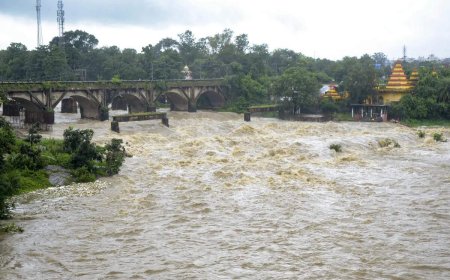
Odisha Faces Fresh Flood Threat
Odisha Faces Fresh Flood Threat
 Madhavisanvi
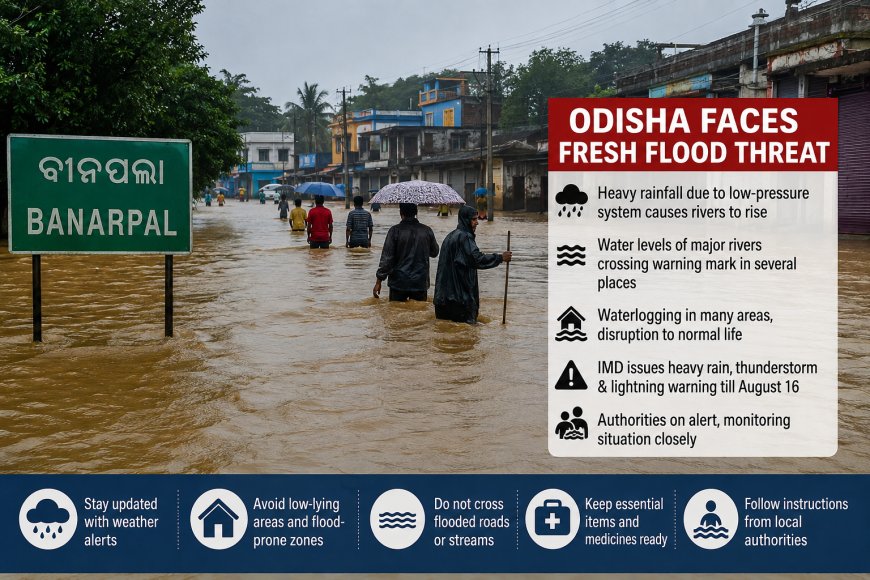
Odisha Faces Fresh Flood Threat: Detailed Report
Odisha is once again facing heightened flood concerns as heavy rainfall, rising river levels and continuing monsoon activity put several parts of the state on alert. The India Meteorological Department (IMD) has issued warnings for heavy rain across Odisha from August 10 through August 16, with thunderstorms and lightning also expected during the first few days.
Why the flood threat is increasing
The immediate concern is the combination of persistent rainfall and already elevated water levels in several rivers. Recent IMD information shows that a low-pressure area that developed over southern West Bengal and adjoining north Odisha moved inland, contributing to enhanced rainfall activity over the region.
When heavy rainfall continues over river catchments, water from upstream areas flows into major rivers. If the rainfall is sufficiently intense, rivers can rise quickly and cross their warning or danger levels. Low-lying communities can then experience waterlogging or flooding even if rainfall at the particular location is temporarily lighter.
🌊 Rivers being closely monitored
According to reports from Odisha's Water Resources Department, the Baitarani River at Akhuapada had reached 18.03 metres, above its reported warning level of 17.83 metres. Although the Baitarani was showing a falling trend at that point, authorities remained concerned because other rivers were continuing to rise.
The Brahmani at Jenapur was also showing a rising trend, although it remained below its warning level. Rising water levels were additionally reported in the Budhabalanga at Baripada and the Subarnarekha at Jamsolaghat and Rajghat.
This situation is important because river conditions can change rapidly after heavy rainfall in upstream catchments.
⚠️ What the IMD warning means
The IMD's Odisha warning issued on August 10 lists:
-
August 10: Heavy rain, with thunderstorms and lightning
-
August 11: Heavy rain, thunderstorms and lightning
-
August 12: Heavy rain, thunderstorms and lightning
-
August 13–16: Heavy rain
This means that the rainfall threat is not limited to a single day. Continued rainfall over several days can increase the possibility of waterlogging, river flooding and disruption to transport and daily life.
🚨 Impact on daily life
Heavy rainfall can affect Odisha in several ways. Urban areas may experience waterlogging on roads, while rural areas can face inundation of agricultural fields and village roads. If rivers rise significantly, bridges and low-lying roads can become difficult or impossible to cross.
Farmers are particularly vulnerable because standing crops can be damaged when fields remain underwater for prolonged periods. Excess water can also affect livestock and make access to villages more difficult.
For residents, the biggest immediate concerns are road connectivity, electricity interruptions, drinking-water safety and access to emergency services.
🏘️ Why low-lying areas are particularly vulnerable
Floodwater generally reaches low-lying settlements first. Villages located close to rivers, canals and drainage channels face a greater risk when water levels rise.
Urban flooding can occur for a different reason. Even without a river overflowing, intense rainfall can overwhelm drainage systems, causing water to accumulate on roads and inside residential areas.
Therefore, the current situation requires monitoring of both riverine flooding and localised urban waterlogging.
🛟 Government preparedness
During periods of heavy rainfall, district administrations and disaster-management authorities generally monitor river gauges, rainfall measurements and vulnerable locations. Where necessary, authorities can arrange evacuation, temporary shelters, boats, emergency supplies and rescue teams.
Residents should pay particular attention to warnings from the Odisha government, district administration and IMD, rather than relying only on social-media reports.
🌾 Concern for agriculture
Agriculture is another major area of concern. Odisha's monsoon season is crucial for paddy cultivation and other crops, but excessive rainfall can become harmful when fields remain submerged.
Farmers in flood-prone areas should maintain drainage channels where possible and protect livestock by moving animals to safer, elevated locations if flooding appears imminent.
⚡ Lightning and thunderstorms
The weather warning also includes thunderstorms and lightning, particularly during the early part of the forecast period. Lightning is a serious monsoon-season hazard.
People should avoid standing in open fields, near isolated trees, on rooftops or beside water bodies during thunderstorms. Outdoor agricultural work should be postponed when lightning activity is observed.
📌 What residents should do
People living in vulnerable areas should:
-
Monitor official weather and flood warnings.
-
Avoid crossing flooded roads or fast-flowing streams.
-
Keep essential medicines, drinking water, food and important documents ready.
-
Move livestock and valuables to higher ground if necessary.
-
Stay away from riverbanks during periods of rising water.
-
Avoid unnecessary travel during intense rainfall.
-
Take shelter indoors during thunderstorms and lightning.
-
Follow evacuation instructions from local authorities.