India Celebrates Its 80th Independence Day: PM Modi Presents Roadmap for Viksit Bharat 2047
India Celebrates Its 80th Independence Day: PM Modi Presents Roadmap for Viksit Bharat 2047
 Madhavisanvi
India Celebrates Its 80th Independence Day: PM Modi Presents Roadmap for Viksit Bharat 2047
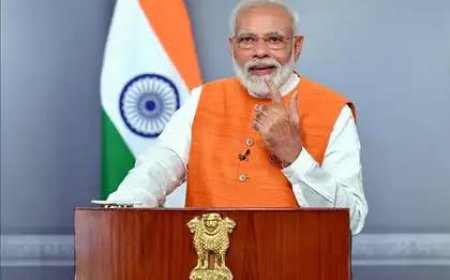
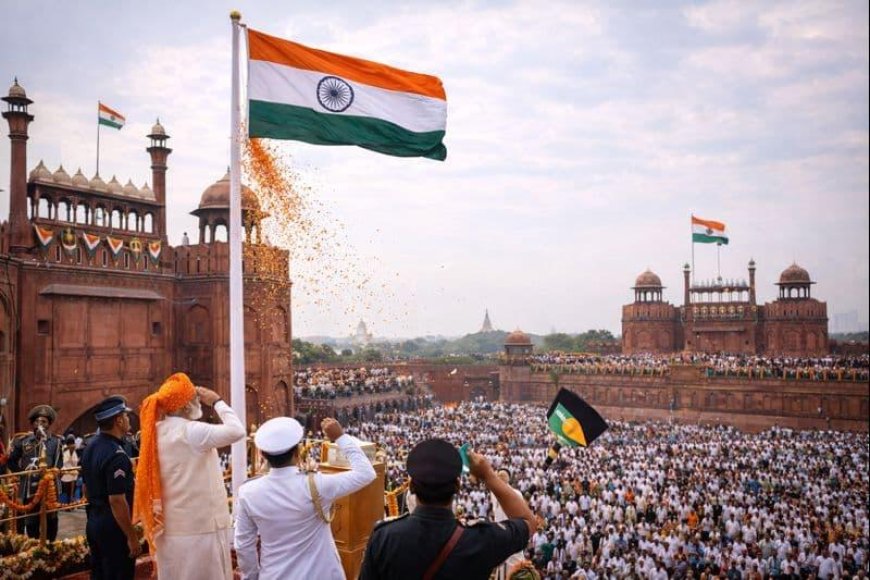
India is celebrating its 80th Independence Day on August 15, 2026, with grand celebrations across the country. The main national ceremony is being held at the historic Red Fort in New Delhi, where Prime Minister Narendra Modi hoisted the Tricolour and addressed the nation. This year's celebrations have placed particular emphasis on “Vande Mataram” and “Yuva Shakti for Viksit Bharat@2047.”
A major national celebration
Independence Day commemorates India's freedom from British rule on August 15, 1947. Every year, the Prime Minister hoists the national flag at the Red Fort and delivers an address outlining the country's achievements, challenges and priorities for the future.
This year's celebration carries additional significance because India is moving toward the centenary of independence in 2047. Prime Minister Modi used his address to present a long-term vision of transforming India into a Viksit Bharat, or developed India, by that year. The celebrations also commemorate 150 years of “Vande Mataram.” According to the Ministry of Defence, the song is being rendered for the first time as part of the Red Fort Independence Day celebrations in this format.
Focus on Viksit Bharat 2047
One of the central messages of the Prime Minister's speech was the ambition to make India a developed country by 2047, when the nation will mark 100 years of independence.
The vision goes beyond economic growth. It includes stronger infrastructure, technological capability, manufacturing, energy security, national security, education, employment opportunities and greater participation by young Indians.
Modi urged citizens to think beyond limited ambitions and contribute to building a stronger and more self-reliant country.
Self-reliance becomes a major priority
Atmanirbharta, or self-reliance, was another major theme of the address.
The Prime Minister emphasized the importance of increasing domestic production and reducing excessive dependence on foreign sources for strategically important products and technologies. Areas such as semiconductors, defence manufacturing, electronics, energy and critical minerals were highlighted as important to India's long-term economic and strategic strength.
The message was also connected with “Make in India” and “Vocal for Local,” encouraging consumers and businesses to support Indian-made products while helping domestic companies become globally competitive.
Technology and artificial intelligence
Technology featured prominently in this year's Independence Day message.
The government has placed increasing emphasis on artificial intelligence, semiconductors and advanced digital technologies as important components of India's future economy. One announcement highlighted plans to provide AI training to 1 crore, or 10 million, young people, with the aim of preparing India's workforce for a technology-driven economy.
Semiconductor manufacturing was another important area. The Prime Minister spoke about plans for additional semiconductor plants, reflecting India's effort to develop a stronger domestic electronics and chip-manufacturing ecosystem.
The broader objective is to ensure that Indian businesses and workers are not simply consumers of emerging technologies but also developers, manufacturers and global competitors.
Youth power at the centre
The 2026 celebrations have a strong focus on India's youth. The official theme itself includes “Yuva Shakti for Viksit Bharat@2047.” Young Indians are expected to play an important role in achieving the country's long-term development goals. Education, skill development, entrepreneurship, artificial intelligence and sports were among the areas connected to this youth-focused vision.
The Prime Minister also announced initiatives involving free online coaching and wider access to opportunities for young people, particularly those preparing for competitive examinations.
The emphasis reflects the idea that India's large young population can become a major economic advantage if provided with appropriate education, skills and employment opportunities.
Manufacturing and economic growth
Economic development remains another key pillar of the Viksit Bharat vision.
The government wants India to expand its manufacturing capabilities, increase exports and develop domestic supply chains. Semiconductor production, electronics, defence equipment and other high-value industries are increasingly being treated as strategic sectors.
The objective is to create more jobs, stronger Indian companies and greater participation in global supply chains.
The Prime Minister's message therefore linked self-reliance with global competitiveness rather than isolation—India aims to manufacture more at home while continuing to participate actively in international trade.
⚡ Energy and strategic security
Energy security was also highlighted as part of India's long-term development strategy.
The government has set an ambitious goal of reaching 100 GW of nuclear power capacity by 2047, according to reports on the speech. Nuclear energy is being positioned alongside renewable energy as part of India's effort to meet growing electricity demand while strengthening energy security.
For a rapidly developing economy, reliable and affordable energy is essential for industries, transportation, digital infrastructure and households.
Message for flood-affected people
The Independence Day address also included a message of solidarity with people affected by recent floods and natural disasters.
This is particularly relevant for states such as Odisha, where heavy monsoon rainfall and flooding have affected communities. The Prime Minister expressed support for families affected by recent disasters and emphasized government assistance and rehabilitation.
A message of national unity
Beyond economic and technological goals, Independence Day remains a celebration of India's unity and the sacrifices made during the freedom struggle.
The Red Fort ceremony brings together representatives of India's armed forces, government institutions, students and citizens. The national flag, National Anthem and patriotic traditions serve as reminders of India's journey from independence in 1947 to its present position as one of the world's major economies and a significant global power.
This year's message combines that historical legacy with a forward-looking goal: building an India that is economically strong, technologically advanced, self-reliant and capable of providing greater opportunities to its citizens by 2047.