Odisha Schools Closed in Four Districts Amid Heavy Rainfall
Odisha Schools Closed in Four Districts Amid Heavy Rainfall
 Madhavisanvi
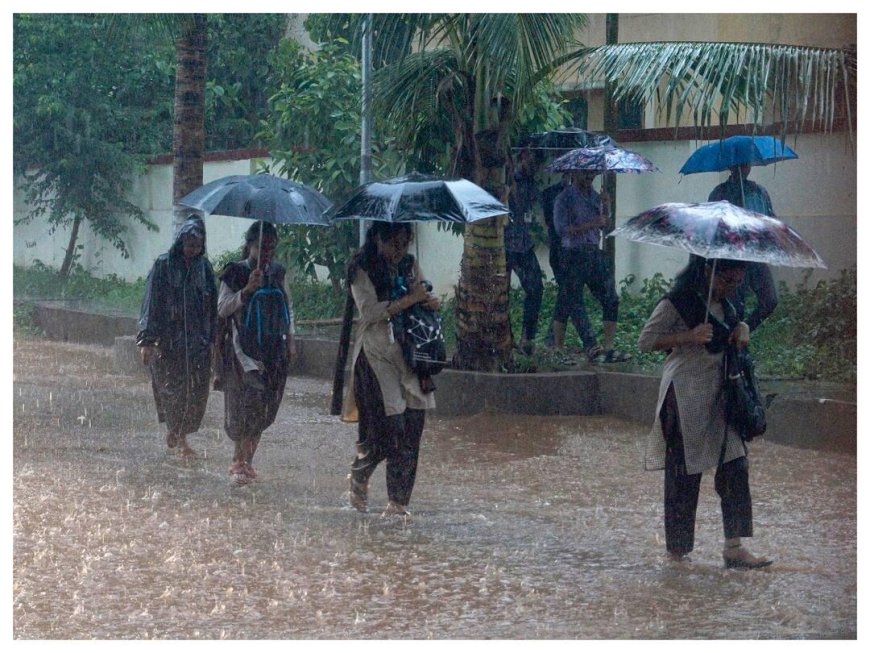
Odisha Schools Closed in Four Districts Amid Heavy Rainfall
Odisha is experiencing another difficult phase of the monsoon season, with persistent heavy rainfall affecting several parts of the state. As rainfall intensifies and the risk of waterlogging, flooding and disruption to transportation increases, authorities have taken precautionary measures to protect students and school staff.
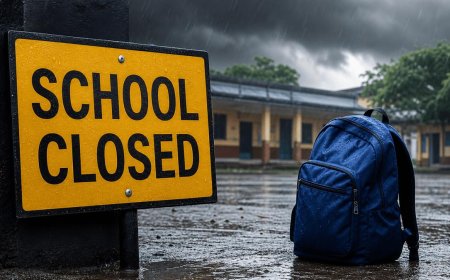
As part of these measures, schools in Bhadrak, Keonjhar, Jajpur and Mayurbhanj have been ordered closed today because of the prevailing weather conditions. The decision comes at a time when several northern Odisha districts are already dealing with rising river levels and flood-related concerns.
The temporary closure of educational institutions is primarily a safety measure. During periods of intense rainfall, travelling to school can become risky, particularly for children who depend on buses, public transport, bicycles or walking routes that may pass through low-lying or waterlogged areas.
Why schools have been closed
Heavy rainfall can create several risks for students and teachers. Roads may become flooded, bridges and culverts can become difficult to cross, and waterlogging can make normal transportation impossible.
In rural areas, the situation can be particularly challenging. Many students travel several kilometres to reach school, sometimes walking through villages, fields and narrow roads. When heavy rain causes streams and drainage channels to overflow, these routes can become unsafe.
School buildings themselves can also be affected. Water may enter classrooms, playgrounds and access roads. Electrical infrastructure can become dangerous when exposed to water, while strong winds and lightning associated with thunderstorms can create additional risks.
For these reasons, temporary closure is often considered safer than asking students and teachers to travel during hazardous weather.
Four districts under focus
The districts affected by the school closure—Bhadrak, Keonjhar, Jajpur and Mayurbhanj—are located in northern and northeastern Odisha and have experienced significant rainfall during the current weather system.
Each district has different geographical characteristics, but several areas are vulnerable to heavy rain, river swelling, flash flooding and waterlogging.
Bhadrak
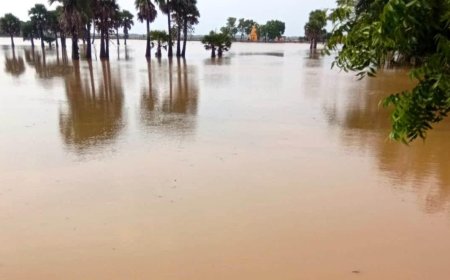
Bhadrak has been among the districts receiving particular attention because of the rising water levels of the Baitarani River and associated waterways.
When river levels rise, low-lying villages and roads can become inundated. Schools located in or near vulnerable areas may therefore become difficult or dangerous to access.
For parents, the closure provides an important safety precaution because children do not have to travel through potentially flooded areas.
Keonjhar
Keonjhar has a different geographical landscape, with extensive hilly and forested areas as well as numerous streams and tributaries.
Heavy rainfall in such areas can cause rapid runoff. Small streams can rise quickly, while roads may become slippery or temporarily blocked by water, mud or fallen trees.
For students travelling from remote villages, these conditions can make school journeys particularly hazardous.
Jajpur
Jajpur is closely connected with the Baitarani river system and has several low-lying areas that can be affected when river levels rise.
Persistent rainfall can also create drainage problems in towns and rural areas. If roads are waterlogged, school buses and other vehicles may have difficulty operating.
The school closure therefore reduces unnecessary movement and allows authorities to concentrate on monitoring vulnerable communities.
Mayurbhanj
Mayurbhanj is another district where heavy rainfall can have significant consequences because of its varied terrain, forests, rivers and streams.
Intense rainfall can increase the possibility of localized flooding and landslides in vulnerable locations. Roads connecting remote communities may also become difficult to use.
Closing schools during severe weather helps protect students who might otherwise have to travel long distances.
Student safety comes first
The most important reason behind a school closure during extreme weather is student safety.
Children may not always understand the dangers associated with floodwater. A road that appears passable can become dangerous if water is flowing underneath or if the surface has been weakened.
There is also the risk of children approaching rivers, ponds or flooded fields out of curiosity. During periods of heavy rain, water bodies can become particularly dangerous because their boundaries may no longer be visible.
Keeping schools closed reduces the number of children travelling outside their homes and therefore reduces their exposure to these hazards.
Transportation challenges
School transportation can become a major problem during heavy rainfall.
School buses may have to travel through roads where water has accumulated. In rural areas, roads can become muddy and slippery, while small bridges and culverts may be submerged.
Students who normally travel by bicycle or motorcycle with family members may also face increased risks.
Even if the school itself is located in a relatively safe area, students may have to cross unsafe roads to reach it. Therefore, authorities often consider the entire journey—not just the condition of the school building—when deciding whether schools should remain open.
Impact on education
School closures are necessary during dangerous weather, but they can also interrupt normal education.
Students may miss classroom lessons, tests, practical activities and other academic work. Teachers may need to adjust lesson plans after schools reopen.
However, a short-term interruption is generally easier to manage than the consequences of exposing children to unsafe conditions.
Schools can later provide additional classes, revision sessions or alternative learning arrangements when conditions return to normal.
Online and home-based learning
Where infrastructure permits, schools may use digital platforms or home-based learning resources to keep students engaged during closures.
Teachers can provide homework, reading assignments, worksheets or revision materials through digital communication channels.
However, online learning is not equally accessible to every student. Rural households may have limited internet connectivity, electricity problems or insufficient access to smartphones and computers.
Therefore, digital education can complement but cannot always completely replace classroom teaching during prolonged disruptions.
Importance of official communication
During severe weather, parents should rely on official announcements from the district administration, education authorities and school management.
Weather-related messages can spread rapidly through social media, but not every message is accurate. Parents should verify information before making decisions about school attendance.
If authorities have officially announced a school closure, parents should follow that instruction even if local weather temporarily appears to have improved.
Weather conditions can change quickly, particularly during monsoon systems.
Flooding and waterlogging concerns
One of the major concerns associated with heavy rainfall in Odisha is waterlogging.
Urban areas can experience drainage congestion, while rural areas may face flooding of agricultural fields and village roads.
When drainage systems are unable to handle the volume of rainfall, water can accumulate around schools and residential areas.
If water remains stagnant for a long time, it can also create health concerns, including increased mosquito breeding and contamination of water sources.
River levels and school safety
Rising rivers are another important factor.
The Baitarani and Brahmani river systems have been under close observation during the current period of heavy rainfall. Rising river levels can affect settlements far away from the main river channel because tributaries, canals and drainage systems can also become overwhelmed.
Schools in flood-prone locations may therefore remain closed until authorities are confident that roads and surrounding areas are safe.
The decision is particularly important for schools located in low-lying villages.
Lightning and thunderstorms
Heavy monsoon rainfall can also be accompanied by thunderstorms and lightning.
Odisha has historically experienced significant lightning activity during the monsoon season. Children are particularly vulnerable if they are travelling or playing outdoors during thunderstorms.
School closure can therefore reduce exposure to lightning and severe weather.
Parents should also advise children to remain indoors during thunderstorms and avoid open fields, isolated trees, ponds and other exposed locations.
Role of district administrations
District administrations play a central role in managing weather-related emergencies.
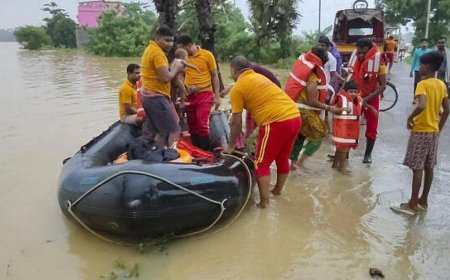
Their responsibilities can include monitoring rainfall and river levels, assessing road conditions, coordinating with disaster-response agencies and communicating warnings to local communities.
When schools are closed, officials can also use school buildings as emergency shelters if necessary, particularly in rural areas.
This makes schools an important part of the broader disaster-management system.
Schools as relief centres
During floods and other disasters, school buildings are sometimes used as temporary shelters because they are usually large, accessible public facilities.
Classrooms and halls can accommodate displaced families, while playgrounds may provide space for emergency vehicles and relief supplies.
However, if a school is being used as a relief centre, it may take additional time to clean, disinfect and restore the building before regular classes can resume.
What parents should do
Parents in the four affected districts should take several precautions while schools remain closed.
They should:
-
Keep children indoors during periods of heavy rain and thunderstorms.
-
Prevent children from playing near rivers, ponds, canals or flooded roads.
-
Avoid unnecessary travel.
-
Monitor official weather and district-administration announcements.
-
Keep emergency phone numbers available.
-
Ensure children have safe drinking water.
-
Keep essential medicines and emergency supplies ready.
-
Follow evacuation instructions if their locality is declared vulnerable.
-
Check with the school before sending children back once the closure period ends.
What students can do at home
Students can use the school closure period productively by continuing their studies from home where possible.
They can revise previously completed chapters, complete homework, read textbooks and prepare for upcoming examinations.
Students with internet access may use online educational resources recommended by their teachers.
However, academics should not come at the expense of safety. Children should not be asked to travel to tuition centres or coaching classes if roads are unsafe.
What teachers can do
Teachers can help students by maintaining communication with parents and providing appropriate study materials.
They can identify essential topics that students should revise while schools remain closed.
If digital communication is available, teachers can send assignments or conduct limited online sessions.
Teachers should also remain alert to students who may be particularly affected by the weather, especially those living in flood-prone or remote villages.
Health concerns after flooding
Once floodwater enters residential or school areas, additional health precautions may be necessary.
Students should avoid direct contact with contaminated water. Schools may need to inspect drinking-water sources, toilets, electrical systems and classrooms before reopening.
Cleaning and disinfection should be completed where necessary.
Parents should also watch for symptoms such as fever, diarrhoea, vomiting or skin irritation following exposure to contaminated water and seek appropriate medical assistance if needed.
When will schools reopen?
The reopening of schools depends on the local situation and official instructions.
Authorities will generally consider factors such as:
-
Rainfall conditions.
-
River water levels.
-
Road accessibility.
-
Flooding and waterlogging.
-
Safety of school buildings.
-
Electricity and drinking-water availability.
-
Weather forecasts.
-
Overall safety of students and teachers.
Parents should therefore wait for an official reopening announcement rather than assuming that schools will automatically reopen the following day.
Broader impact on families
School closures can affect more than students' education.
For working parents, keeping children at home may create additional responsibilities. Families may also have to deal with waterlogging, power interruptions, transport problems and other difficulties caused by heavy rainfall.
In rural communities, parents may simultaneously be dealing with agricultural losses or livestock-related problems.
Therefore, school closures should be understood as part of a broader emergency response rather than simply an education-related decision.
Importance of preparedness
The current situation highlights the importance of disaster preparedness in Odisha.
Schools can prepare emergency plans that identify safe evacuation routes, emergency contact numbers and procedures for protecting students during floods, lightning and cyclones.
Students should also be taught basic disaster-safety principles from an early age.
Knowing what to do during a flood or thunderstorm can save lives.