🇮🇳 Udyam Yojana of Bihar
The Government of Bihar has launched several initiatives to promote entrepreneurship, employment, and economic growth. Among these, the Udyam Yojana (often referred to as Mukhyamantri Udyami Yojana) is one of the most significant schemes aimed at empowering youth, women, and marginalized communities by encouraging them to start their own businesses.
 Avya7800
1. Introduction
Entrepreneurship plays a key role in economic development. Recognizing the need to generate employment and reduce migration, the Government of Bihar introduced the Mukhyamantri Udyami Yojana.
The scheme provides financial assistance, training, and support to individuals who wish to establish micro and small enterprises. It aims to create job opportunities and promote self-reliance among the people of Bihar.
2. Objectives of Udyam Yojana
The primary objectives of the scheme include:
Promoting entrepreneurship among youth
Reducing unemployment
Encouraging small and medium enterprises (SMEs)
Supporting women and backward communities
Boosting industrial development in Bihar
The scheme is aligned with national initiatives like Startup India and Make in India.
3. Key Features of the Scheme
The Udyam Yojana offers several attractive features:
(a) Financial Assistance
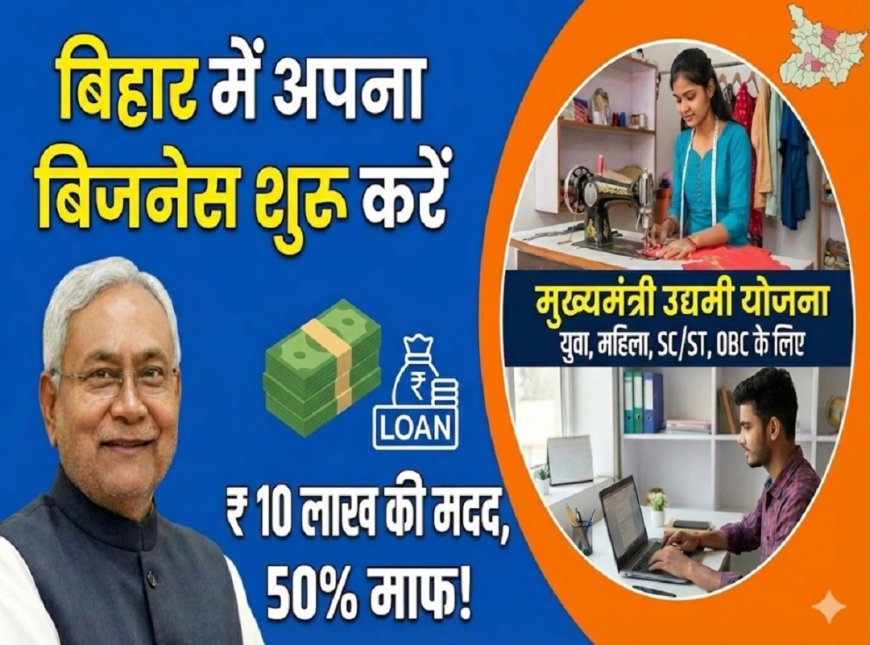
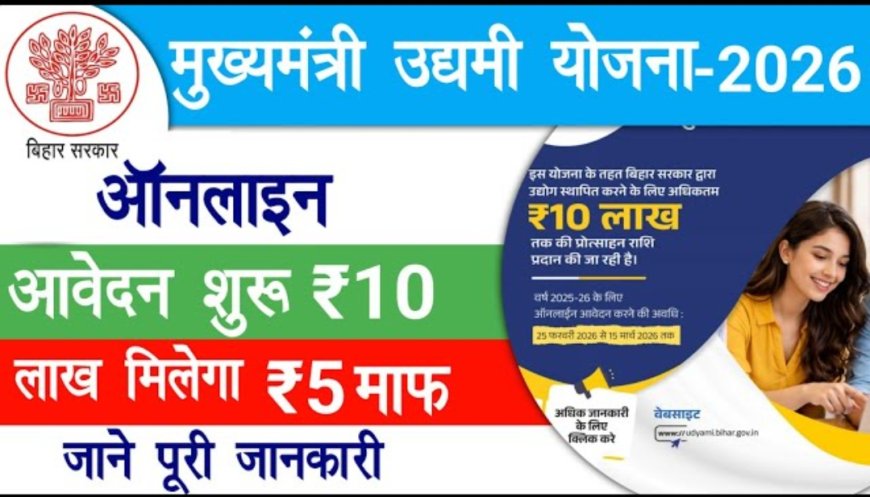
Total project cost support up to ₹10 lakh
50% subsidy (maximum ₹5 lakh)
Remaining amount provided as loan
(b) Easy Loan Facility
Low-interest loans
Flexible repayment options
(c) Training and Skill Development
Entrepreneurship training programs
Technical and business guidance
(d) Online Application Process
Transparent and simple digital application system
These features make it easier for individuals to start their own businesses.
4. Types of Udyam Yojana in Bihar
The scheme has different categories to ensure inclusiveness:
(a) Mukhyamantri Yuva Udyami Yojana
For general category youth
(b) Mukhyamantri Mahila Udyami Yojana
Specifically for women entrepreneurs
(c) Mukhyamantri SC/ST Udyami Yojana
For Scheduled Castes and Scheduled Tribes
(d) Minority Udyami Support
Encouraging minority communities
This categorization ensures equal opportunities for all sections of society.
5. Eligibility Criteria
To apply for the scheme, applicants must meet certain criteria:
Resident of Bihar
Age between 18–50 years
Minimum educational qualification (usually 12th pass)
No prior business loan default
Applicants must also present a viable business plan.
6. Application Process
The application process is simple and digital:
Steps:
Visit the official portal
Register with personal details
Upload required documents
Submit business proposal
Verification and approval
The use of digital platforms reflects the success of Digital India.
7. Required Documents
Applicants need to provide:
Aadhaar card
Residence certificate
Educational qualification certificate
Bank account details
Business plan
Proper documentation ensures transparency and accountability.
8. Types of Businesses Supported
The scheme supports a wide range of businesses:
Manufacturing:
Food processing units
Textile and garment units
Small-scale industries
Service Sector:
IT services
Repair shops
Tourism-related services
Agriculture-based:
Dairy farming
Poultry
Organic farming
This diversity encourages innovation and local economic growth.
9. Role in Employment Generation
One of the biggest benefits of the scheme is job creation.
Each business creates employment opportunities
Reduces dependency on government jobs
Encourages self-employment
This helps in addressing unemployment in Bihar.
10. Women Empowerment
The scheme plays a crucial role in empowering women.
Benefits:
Financial independence
Skill development
Increased participation in economic activities
Women entrepreneurs are becoming role models in society.
11. Impact on Rural Development
Rural areas benefit significantly from the scheme.
Key Changes:
Local business development
Reduced migration to cities
Improved standard of living
The scheme promotes inclusive growth across regions.
12. Challenges in Implementation
Despite its success, the scheme faces some challenges:
Issues:
Lack of awareness in rural areas
Delay in loan approval
Limited business knowledge among applicants
Addressing these issues is essential for better outcomes.
13. Government Support and Monitoring
The government ensures proper implementation through:
Regular monitoring
Training programs
Financial audits
This helps maintain transparency and effectiveness.
14. Success Stories
Many young entrepreneurs have benefited from the scheme.
Examples:
Small manufacturing units started by youth
Women-led businesses in tailoring and food processing
Rural startups in agriculture
These success stories inspire others to take up entrepreneurship.
15. Comparison with Other Schemes
The Udyam Yojana is similar to national schemes but has unique features:
Compared to Startup India:
Focuses more on small-scale businesses
Targets rural and local entrepreneurs
Compared to Mudra Yojana:
Higher subsidy component
State-specific support
This makes it more accessible for Bihar residents.
16. Economic Impact on Bihar
The scheme contributes to:
Industrial growth
Increased income levels
Reduction in poverty
It is helping Bihar move toward becoming a self-reliant economy.
17. Future Prospects
The future of Udyam Yojana looks promising.
Expected Developments:
Expansion of funding
Integration with digital platforms
Increased participation
The scheme can become a model for other states.
Conclusion
The Udyam Yojana of Bihar is a transformative initiative aimed at promoting entrepreneurship and economic development. By providing financial assistance, training, and support, it empowers individuals to become self-reliant and contribute to the economy.
The scheme not only generates employment but also promotes social inclusion and women empowerment. While challenges remain, continuous efforts by the government can ensure its success.