Tamil Nadu Farmers Intensify Cauvery Water Protest: Irrigation Crisis Deepens in the Delta
Tamil Nadu Farmers Intensify Cauvery Water Protest: Irrigation Crisis Deepens in the Delta
 Madhavisanvi
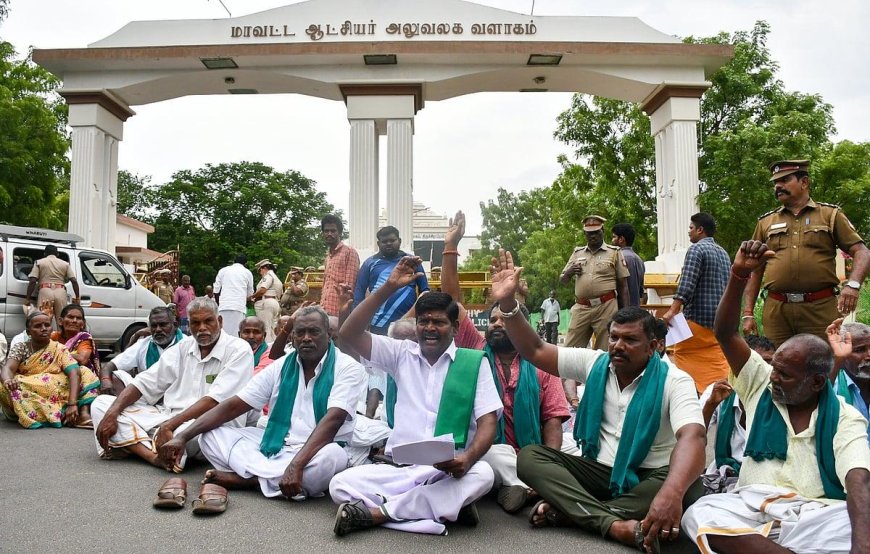
Tamil Nadu Farmers Intensify Cauvery Water Protest: Irrigation Crisis Deepens in the Delta
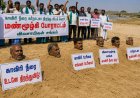
The long-standing Cauvery water dispute between Tamil Nadu and Karnataka has once again become a major political and agricultural issue, as farmers in Tamil Nadu intensified their protests demanding the immediate release of Cauvery water for irrigation. In one of the most striking demonstrations, farmers partially buried themselves in sand along the Cauvery riverbank in Tiruchirappalli to symbolize the drying river and the distress faced by farming communities. The protest, led by farmer leader P. Ayyakannu and other agricultural organizations, highlighted growing concerns over water shortages during the crucial Kuruvai cultivation season.
A Long-Running Interstate Water Dispute
The Cauvery River originates in Karnataka and flows through Tamil Nadu before reaching the Bay of Bengal. For decades, both states have disagreed over how the river's water should be shared, particularly during years of below-normal rainfall.
The dispute has been the subject of tribunal awards, Supreme Court judgments, and monitoring by the Cauvery Water Management Authority (CWMA) and the Cauvery Water Regulation Committee (CWRC). Despite these mechanisms, disagreements continue almost every year when reservoir levels decline and irrigation demand increases.
Why Farmers Are Protesting
Tamil Nadu's delta districts—including Thanjavur, Tiruvarur, Nagapattinam and Tiruchirappalli—depend heavily on Cauvery water for agriculture. Farmers say delayed or inadequate water releases threaten paddy cultivation, particularly the Kuruvai crop, which requires timely irrigation.
According to protesting farmers, insufficient river flow has affected:
-
Paddy transplantation.
-
Seedling survival.
-
Irrigation scheduling.
-
Agricultural labour opportunities.
-
Rural incomes.
Many farmers argue that without immediate water releases, thousands of hectares of farmland could face reduced productivity.
Symbolic Sand-Burial Protest
To draw national attention, farmers staged a symbolic protest by burying themselves neck-deep in sand on the banks of the Cauvery River in Tiruchirappalli. The demonstration was intended to portray the severe hardship faced by cultivators and the drying conditions in parts of the river basin.
Farmer leaders said the protest was aimed at urging both the Union Government and Karnataka to ensure timely implementation of water-sharing decisions. Images of the protest quickly spread across news and social media, bringing renewed attention to the issue.
Tamil Nadu's Legal Action
Alongside the protests, the Tamil Nadu Government has approached the Supreme Court, alleging that Karnataka has not released the quantity of water directed by the CWMA and the CWRC. The state has requested judicial intervention to ensure compliance with the prescribed water-sharing arrangements.
Karnataka's Position
Farmer groups and organizations in Karnataka have also opposed additional water releases, arguing that the state itself faces water shortages because of rainfall deficits and must prioritize drinking water and irrigation needs within Karnataka. Demonstrations have also taken place there, reflecting the competing pressures on both governments.
Impact on Agriculture
Agriculture remains the backbone of the Cauvery delta economy. If irrigation water is delayed, farmers may face:
-
Lower crop yields.
-
Increased cultivation costs.
-
Higher dependence on groundwater.
-
Rising debt burdens.
-
Reduced employment for agricultural workers.
Experts note that timely water availability is critical for maintaining food production and rural livelihoods.
Political Significance
The Cauvery issue has frequently influenced politics in both Tamil Nadu and Karnataka. Political parties often demand strict implementation of tribunal awards and court directions while also responding to local farmers' concerns. The latest protests have again placed the dispute at the centre of public and political debate. (www.ndtv.com)
The Way Forward
Water experts have suggested several long-term measures, including:
-
Better reservoir management.
-
Improved irrigation efficiency.
-
Expansion of micro-irrigation systems.
-
Greater crop diversification.
-
Stronger cooperation between basin states.
-
Transparent sharing of rainfall and reservoir data.
Many analysts believe that sustained dialogue, scientific water management and adherence to legal mechanisms will be essential to reducing recurring tensions.