
Budget 2026 Expectations: Higher Standard Deduction, Gratuity Relief and NPS Tax Changes in Focus
Budget 2026 may bring higher standard deduction, gratuity tax relief, NPS exemptions and stable capital gains taxes as the government fine-tunes the new tax regime.
 aaravi_editor
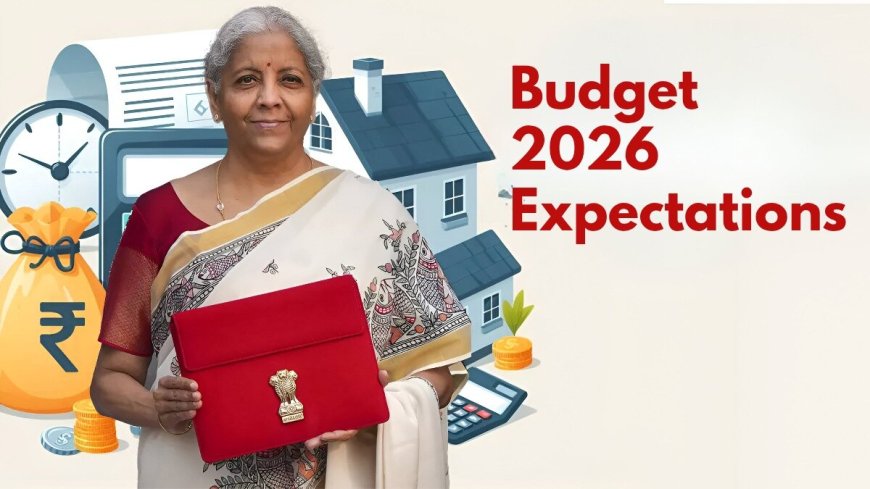
As Nirmala Sitharaman prepares to present the Union Budget on February 1, 2026, expectations are rising among taxpayers following the sweeping personal income tax reforms announced last year.
Budget 2025 marked a significant reset of India’s income tax framework, increasing the tax-free income threshold to ₹12 lakh and easing the burden on higher earners by extending the 30% tax slab to incomes above ₹24 lakh. With these changes now in place, attention has shifted to whether Budget 2026 will further refine the new tax regime to boost disposable income and improve tax efficiency.
Middle-Class Tax Relief in Focus
According to Parag Jain, Tax Head at 1 Finance, there is growing anticipation that the standard deduction could be increased from the current ₹75,000 to ₹1 lakh. Such a move would effectively raise tax-free income, especially when combined with existing rebates.
Jain also noted that widening tax slabs—such as extending the 5% tax bracket beyond the ₹4–8 lakh range—could provide further relief to middle-income earners. There is also speculation that limited deductions, such as house rent allowance (HRA) or housing loan interest, may be partially reintroduced into the new tax regime to make it more attractive for salaried taxpayers.
Gratuity Taxation Under Review
Gratuity taxation is another area likely to see changes, especially with the New Labour Codes set to take effect in 2026. Currently, tax-free gratuity requires five years of continuous service, a condition that may be revisited.
Jain said Budget 2026 could introduce pro-rata gratuity exemptions or reduce the service requirement to one year for fixed-term employees, aligning tax rules with labour reforms. He added that the overall tax-free gratuity cap may also be raised to ₹25 lakh, providing greater retirement security for gig and contract workers.
NPS and Retirement Planning
The National Pension System (NPS) is another area where tax alignment is being sought. In 2025, regulators allowed subscribers to withdraw up to 80% of their corpus at maturity, but under the Income Tax Act, only 60% is currently tax-exempt.
Jain expects Budget 2026 to amend Section 10(12A) to provide full tax exemption on the 80% lump sum, aligning taxation with pension regulations. He also suggested that deduction limits under Section 80CCD(1B) could be increased to ₹1–1.2 lakh, even under the new tax regime, to strengthen long-term retirement planning.
Old Tax Regime Still Relevant
Despite the government’s push toward a simplified, deduction-light tax structure, the old tax regime continues to be relevant for certain sections, particularly senior citizens, who rely on deductions related to healthcare, insurance, and interest income. Policymakers are therefore expected to tread carefully to ensure the transition does not disadvantage these groups.
Capital Gains Tax: Stability Expected
Investors are also watching for cues on capital gains taxation. While no major changes were announced in Budget 2025, the sharp hikes introduced in July 2024 remain fresh in market memory.
Anand K Rathi, Co-founder of MIRA Money, said further increases could dampen investor confidence. He suggested that instead of raising long-term capital gains tax, the government could encourage patient capital by taxing short-term gains more heavily while offering exemptions for longer holding periods, such as two years or more.
As Budget 2026 approaches, the Finance Minister faces the challenge of balancing tax relief for salaried individuals, retirement security reforms, and investor confidence, while maintaining fiscal discipline.