
The Indian share market is one of the fastest-growing financial
It serves as a platform where investors can buy and sell shares of publicly listed companies, enabling businesses to raise capital and individuals to grow their wealth.
 Avya7800
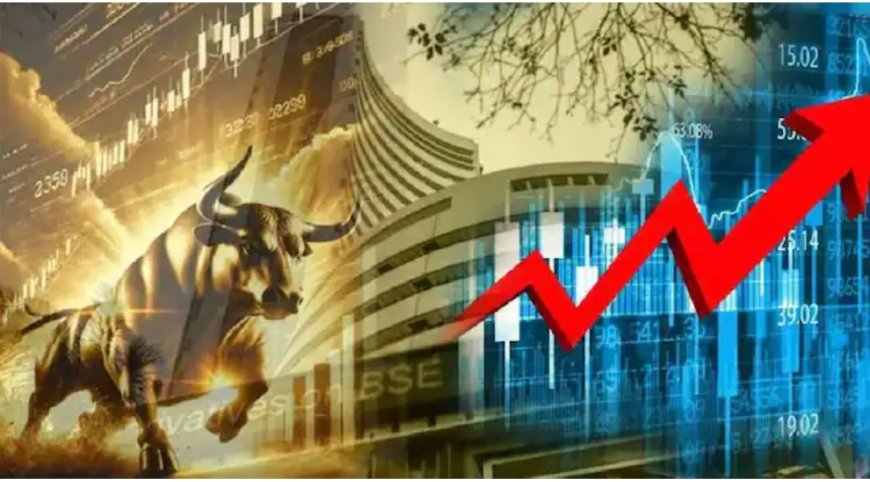
1. Introduction
The Indian share market, also known as the stock market, is a marketplace where financial securities such as stocks, bonds, and derivatives are traded. When a person buys a share of a company, they become a partial owner of that company.
India has two major stock exchanges:
Bombay Stock Exchange
National Stock Exchange of India
These exchanges provide a regulated and transparent platform for trading securities.
2. History of the Indian Share Market
The Indian stock market has a long and rich history. The Bombay Stock Exchange, established in 1875, is the oldest stock exchange in Asia. Initially, trading was conducted informally under banyan trees by a small group of brokers.
In the 1990s, economic liberalization transformed the Indian economy and stock market. The establishment of the National Stock Exchange of India in 1992 introduced electronic trading, making transactions faster, more efficient, and transparent.
3. Structure of the Share Market
The Indian share market consists of two main segments:
Primary Market
This is where companies issue new shares to the public through Initial Public Offerings (IPOs). Investors can buy shares directly from the company.
Secondary Market
In this market, investors buy and sell shares among themselves on stock exchanges. Prices fluctuate based on demand and supply.
4. How the Share Market Works
The share market operates on the principle of demand and supply. When more people want to buy a stock, its price rises. When more people want to sell, the price falls.
Trades are executed through brokers and online trading platforms. The process involves:
Placing an order
Matching buyers and sellers
Settlement of transactions
Modern trading in India is fully electronic, ensuring speed and accuracy.
5. Key Market Participants
Several participants contribute to the functioning of the market:
Retail Investors: Individual investors
Institutional Investors: Banks, mutual funds, insurance companies
Brokers: Intermediaries facilitating trades
Market Makers: Provide liquidity
6. Major Stock Indices
Stock indices reflect the overall performance of the market.
SENSEX
It represents 30 large and financially sound companies listed on the Bombay Stock Exchange.
NIFTY 50
It includes 50 major companies listed on the National Stock Exchange of India.
These indices act as benchmarks for market performance.

7. Types of Securities
The Indian share market offers various types of securities:
Equity Shares: Represent ownership in a company
Preference Shares: Provide fixed dividends
Debentures and Bonds: Debt instruments
Derivatives: Futures and options contracts
8. Investment vs Trading
Investment
Investment involves buying shares for long-term wealth creation. Investors focus on company fundamentals and growth potential.
Trading
Trading involves buying and selling stocks for short-term profits. Types include:
Intraday trading
Swing trading
Positional trading
9. Role of SEBI
The regulatory authority of the Indian stock market is the Securities and Exchange Board of India.
SEBI ensures:
Investor protection
Transparency in trading
Prevention of fraud and manipulation
It plays a crucial role in maintaining market integrity.
10. Initial Public Offering (IPO)
An IPO is the process through which a private company becomes publicly listed by offering shares to investors. It allows companies to raise funds for expansion and operations.
For investors, IPOs present an opportunity to invest in companies at an early stage.
11. Benefits of Investing in the Share Market
Wealth Creation: Potential for high returns over time
Liquidity: Easy to buy and sell shares
Ownership: Shareholders have a stake in companies
Inflation Hedge: Returns often outpace inflation
12. Risks in the Share Market
Despite its advantages, the stock market carries risks:
Market volatility
Economic downturns
Company-specific risks
Emotional decision-making
Proper research and risk management are essential.
13. Factors Affecting the Share Market
Several factors influence stock prices:
Economic indicators (GDP, inflation)
Interest rates
Government policies
Global market trends
Company performance
14. Technology and the Modern Market
Technology has revolutionized the Indian share market:
Online trading platforms
Mobile apps
Algorithmic trading
Real-time data analysis
These advancements have made investing more accessible and efficient.
15. Foreign Investment
Foreign investors play a significant role in the Indian market:
Foreign Institutional Investors (FIIs)
Foreign Direct Investment (FDI)
Their investments bring capital, stability, and global confidence.
16. Popular Sectors in India
The Indian share market includes various sectors:
Information Technology (IT)
Banking and Finance
Pharmaceuticals
Fast-Moving Consumer Goods (FMCG)
Automobile
Each sector offers different opportunities and risks.
17. Tips for Successful Investing
Do thorough research
Diversify your portfolio
Invest for the long term
Avoid emotional decisions
Stay updated with market trends
18. Future of the Indian Share Market
The future of the Indian stock market looks promising due to:
Rapid economic growth
Increasing retail participation
Digital transformation
Strong regulatory framework
India is expected to become one of the largest financial markets globally.
Conclusion
The Indian share market is a dynamic and essential component of the country’s economy. Institutions like the Bombay Stock Exchange and National Stock Exchange of India provide a robust platform for trading and investment.
With proper knowledge, discipline, and strategy, investors can benefit significantly from the opportunities offered by the market. However, it is equally important to understand the risks and invest wisely.