
COMPLETE EXPLANATION ABOUT MUSCLE BUILDING 💪🏼💪🏼
WORKOUT AND DIET ARE THE MOST NEGLECTED ONE IN THIS GENERATION WHICH REQUIRES ATTENTION..
 Aman
Aman
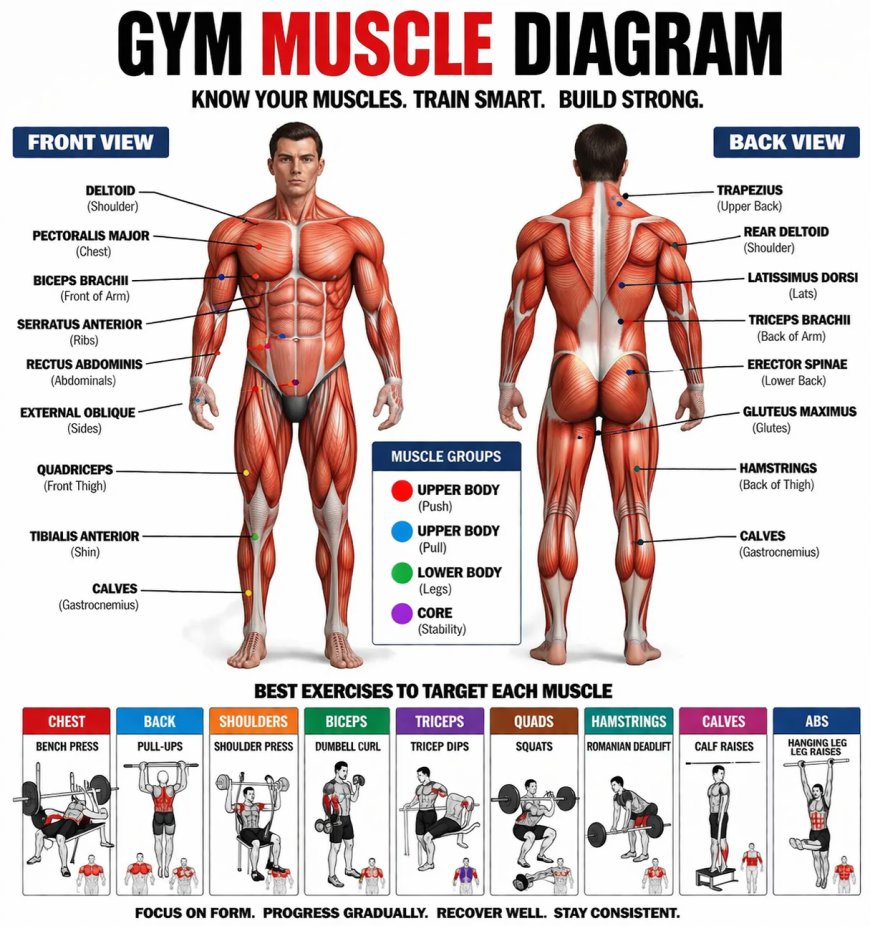
The Complete Guide to Muscle Building: Science, Strategy, and Discipline💪🏼💪🏼
Muscle building is more than just lifting weights in the gym; it is a combination of science, dedication, nutrition, and consistency. People pursue muscle building for various reasons—improving physical appearance, enhancing strength, boosting confidence, and improving overall health. Whether someone is a beginner or an experienced lifter, understanding the fundamentals of muscle growth is essential to achieve long-term success.
This article explores the principles of muscle building, including training methods, nutrition, recovery, mindset, and lifestyle habits that contribute to effective and sustainable muscle growth.
Understanding How Muscles Grow
Muscle growth, scientifically known as hypertrophy, occurs when muscle fibers are exposed to stress during resistance training. When you lift weights or perform intense physical activity, small microscopic tears occur in muscle fibers. The body repairs these fibers during recovery, making them stronger and thicker than before.
Three major factors contribute to muscle growth:
Mechanical Tension – The tension placed on muscles when lifting weights.
Muscle Damage – Micro-tears in muscle fibers that occur during training.
Metabolic Stress – The buildup of metabolites like lactate during exercise.
When these factors are consistently applied through training and supported with proper nutrition and rest, the body adapts by increasing muscle size and strength.
The Role of Resistance Training
Resistance training is the most important factor in muscle building. It involves exercises that challenge muscles against resistance, such as free weights, machines, resistance bands, or bodyweight movements.
Some of the most effective compound exercises include:
Squats
Deadlifts
Bench Press
Pull-ups
Overhead Press
Rows
Compound exercises are powerful because they activate multiple muscle groups at the same time. This leads to greater muscle stimulation and improved hormonal response compared to isolation exercises.
Isolation exercises, such as bicep curls or tricep extensions, target a single muscle group and are useful for improving muscle definition and fixing muscle imbalances.
A well-balanced training routine usually includes both compound and isolation exercises.
Progressive Overload: The Key to Growth
One of the most important principles of muscle building is progressive overload. This means gradually increasing the difficulty of your workouts so your muscles continue to adapt.
Progressive overload can be achieved by:
Increasing the weight you lift
Increasing the number of repetitions
Increasing the number of sets
Improving exercise technique
Reducing rest time between sets
Without progressive overload, muscles stop adapting and growth eventually plateaus. This is why experienced lifters track their workouts and aim to improve performance over time.
Training Frequency and Volume
Training volume refers to the total amount of work performed during a workout. It is typically calculated using the formula:
Sets × Reps × Weight.
For muscle growth, most research suggests performing 10–20 sets per muscle group per week. This volume can be divided across multiple training sessions.
Training frequency also plays a significant role. Many fitness experts recommend training each muscle group twice per week rather than once.
A popular training split might look like:
Day 1: Chest and Triceps
Day 2: Back and Biceps
Day 3: Legs
Day 4: Shoulders and Core
Day 5: Rest or active recovery
This type of split allows muscles to recover while still maintaining a high training stimulus.
Nutrition for Muscle Growth
Training stimulates muscle growth, but nutrition provides the building blocks. Without proper nutrition, muscle development will be slow or nonexistent.
Protein Intake
Protein is the most important nutrient for muscle building because it supplies amino acids needed to repair and build muscle tissue.
Good protein sources include:
Eggs
Chicken breast
Fish
Lean beef
Milk and yogurt
Lentils and beans
Soy products
Nuts and seeds
Most athletes require around 1.6 to 2.2 grams of protein per kilogram of body weight per day for optimal muscle growth.
Carbohydrates
Carbohydrates provide energy for intense workouts. They replenish glycogen stores in muscles and help maintain training performance.
Healthy carbohydrate sources include:
Rice
Oats
Potatoes
Fruits
Whole grains
A diet too low in carbohydrates can lead to fatigue and reduced training intensity.
Healthy Fats
Fats support hormone production, including testosterone, which plays a role in muscle growth.
Healthy fat sources include:
Avocados
Olive oil
Nuts
Seeds
Fatty fish
A balanced diet should include moderate amounts of healthy fats.
Caloric Surplus for Muscle Gain
To build muscle effectively, the body needs extra energy. This is achieved through a caloric surplus, meaning consuming more calories than the body burns.
However, the surplus should be moderate. Excessive calorie intake can lead to unnecessary fat gain.
A surplus of 250–500 calories per day is generally recommended for steady muscle growth.
Tracking food intake through apps or meal planning can help maintain this balance.
Importance of Recovery
Muscles do not grow during workouts; they grow during recovery. Training creates the stimulus, but recovery allows the body to rebuild stronger muscle fibers.
Key recovery strategies include:
Sleep
Sleep is one of the most powerful muscle-building tools. During deep sleep, the body releases growth hormone, which helps repair tissues and build muscle.
Most adults need 7–9 hours of quality sleep per night.
Rest Days
Rest days allow muscles to recover and prevent overtraining. Without adequate rest, performance declines and injury risk increases.
Active recovery, such as light walking, stretching, or yoga, can help improve blood circulation and reduce muscle soreness.
The Role of Consistency
Muscle building is a slow process that requires patience and consistency. Many beginners expect dramatic results within a few weeks, but meaningful muscle growth usually takes months or even years.
Consistency involves:
Following a regular workout schedule
Maintaining a balanced diet
Prioritizing sleep and recovery
Staying disciplined even when motivation decreases
Small improvements over time lead to significant transformations.
Common Mistakes in Muscle Building
Many people struggle to build muscle because they make common mistakes.
Training Too Much
Overtraining can prevent muscles from recovering properly. More workouts do not always mean better results.
Poor Nutrition
Skipping meals or consuming insufficient protein can severely limit muscle growth.
Lack of Progressive Overload
Doing the same workout with the same weights every week will eventually stop producing results.
Ignoring Form and Technique
Poor exercise form can lead to injuries and reduce muscle activation. Learning proper technique is essential for long-term success.
Supplements for Muscle Growth
While supplements are not necessary, some can support muscle-building goals when combined with proper training and nutrition.
Common supplements include:
Protein Powder – Helps meet daily protein requirements.
Creatine Monohydrate – One of the most researched supplements that improves strength and muscle performance.
Branched Chain Amino Acids (BCAAs) – May help reduce muscle soreness and fatigue.
However, supplements should never replace whole foods.
The Psychological Side of Muscle Building
Muscle building is not only a physical challenge but also a mental one. Motivation can fluctuate, and progress may sometimes feel slow.
Developing a strong mindset is crucial.
Successful lifters often:
Set realistic goals
Track their progress
Stay disciplined during difficult periods
Focus on long-term results
Building muscle requires persistence, and the mental strength gained during the journey often extends into other areas of life.
Long-Term Benefits of Muscle Building
Beyond aesthetics, muscle building offers numerous health benefits.
Some of these include:
Improved metabolism
Stronger bones
Reduced risk of injury
Better posture
Improved insulin sensitivity
Enhanced mental confidence
Muscle mass also helps maintain physical independence as people age.
Final Thoughts
Muscle building is a journey that combines training, nutrition, recovery, and mental discipline. There is no shortcut to achieving a strong and muscular physique. The process requires consistent effort over time.
By focusing on progressive overload, eating a balanced diet rich in protein, allowing adequate recovery, and maintaining discipline, anyone can gradually build muscle and improve their overall health.
The most important lesson in muscle building is patience. Results do not appear overnight, but with dedication and persistence, the transformation—both physical and mental—can be truly remarkable.