JF-17 Hype vs Reality: Pakistan’s Fighter Jet Boom Plays Out on Social Media, Not in the Skies
Pakistan’s claims of soaring global demand for the JF-17 fighter jet rely more on media narratives than confirmed deals, analysts say.
 aaravi_editor
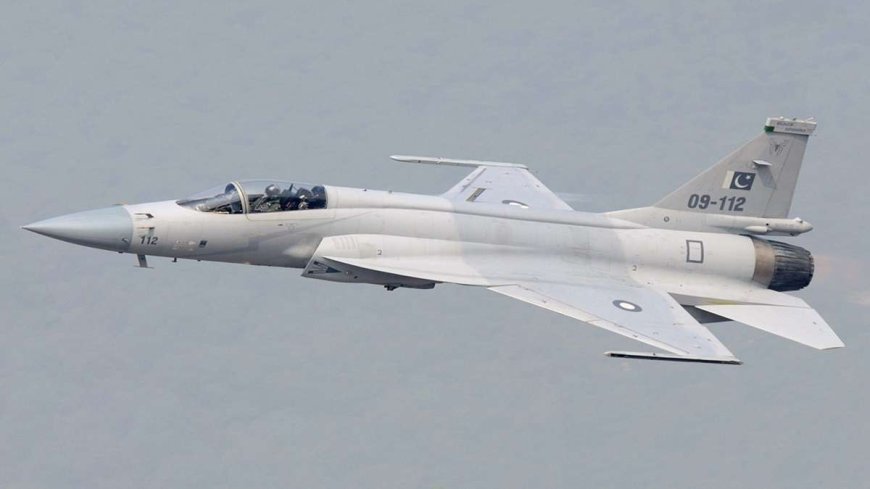
Pakistan appears to be winning an air war of narratives rather than aerial engagements. In recent weeks, Islamabad has pushed the claim that its so-called indigenous fighter, the JF-17 Thunder, is witnessing a surge in global demand. A closer look, however, suggests the story is long on speculation and short on evidence.
At the centre of this narrative amplification is Reuters, particularly reporting by its Pakistan-based journalist Saad Sayeed. Since early 2026, multiple Reuters pieces have suggested that countries such as Bangladesh, Sudan, Indonesia — and even Saudi Arabia — are considering or nearing deals for the JF-17.
Yet across these reports, concrete details are notably absent. There are no signed contracts, official announcements, delivery schedules or government confirmations. Instead, the language leans heavily on unnamed sources and conditional phrasing.
The most eye-catching claim involved a supposed “jets-for-loans” arrangement with Saudi Arabia. This assertion raised eyebrows given that the Royal Saudi Air Force already operates advanced platforms like the F-15 and Eurofighter Typhoon and is in the process of acquiring F-35 stealth fighters. The claim quickly lost credibility when Pakistan’s own foreign ministry stated it was unaware of any such discussions.
Another report in late 2025 cited Pakistani military sources to claim a $4 billion JF-17 deal with Khalifa Haftar’s Libyan National Army — despite Libya being under a UN arms embargo, and with no clarity on how such a transaction would be legally permitted.
Export Claims vs Operational Reality
The renewed push around JF-17 exports is widely seen as an attempt by the government led by Asim Munir to reinforce domestic narratives of success following Operation Sindoor, and to project Pakistan as an emerging defence manufacturing power.
Operational facts, however, tell a different story. During the initial phase of Operation Sindoor, it was primarily Chinese-origin J-10C fighters — not JF-17s — that featured in aerial engagements. Despite this, the JF-17 is now being retrospectively marketed as “battle-proven”.
Even within Pakistan, commentators and defence watchers have questioned the credibility of these claims.
Pakistan’s actual export record for the JF-17 is limited to Myanmar and Nigeria — both of which have faced significant operational challenges. Reports from Myanmar point to grounding of aircraft due to avionics issues, structural concerns and chronic shortages of spare parts.
Industrial Constraints
Beyond performance issues, Pakistan’s industrial capacity remains a major constraint. The Pakistan Aeronautical Complex at Kamra can reportedly manufacture only about 20–25 aircraft annually, and even that output depends heavily on Chinese avionics and Russian engines.
Defence analysts note that sustained exports require not just marketing momentum, but robust production lines, long-term maintenance support and credible after-sales infrastructure — areas where Pakistan continues to struggle.
In the end, critics argue that while ambitious headlines and speculative reporting may dominate news cycles, they cannot substitute for the industrial depth needed to build a serious and reliable defence manufacturing ecosystem.