
👩🎓 Nari (Women) Education Policy in India –
In India, the concept of nari shiksha (women’s education) has evolved significantly over time.
 Avya7800
📜 Historical Background of Women’s Education in India
🏛️ Ancient India
In ancient India, women like Gargi and Maitreyi were respected scholars. They had access to education and participated in philosophical discussions.
⚔️ Medieval Period
During the medieval era, women’s education declined due to social customs like purdah and child marriage. Education for girls became limited.
🇮🇳 Modern Reform Movement
In the 19th century, social reformers worked to improve women’s education:
Raja Ram Mohan Roy promoted women’s rights
Ishwar Chandra Vidyasagar supported widow remarriage and girls’ education
Savitribai Phule opened the first school for girls in India
These efforts laid the foundation for modern women’s education.
📖 Constitutional Provisions for Women’s Education
The Constitution of India guarantees equality and education rights:
Article 14 – Equality before law
Article 15 – Prohibition of discrimination based on gender
Article 21A – Right to education
The Right to Education Act 2009 ensures free and compulsory education for children (6–14 years), including girls.
🎯 Importance of Women’s Education
Educating women leads to:
Improved family health and nutrition
Economic growth and employment
Reduced poverty and population control
Increased awareness and empowerment
An educated woman contributes not only to her family but also to society and the nation.
📘 Government Policies and Schemes for Women’s Education
1. National Education Policy 2020
The National Education Policy 2020 focuses on:
Gender inclusion fund
Equal access to education
Reduction of dropout rates among girls
Promotion of vocational and higher education
2. Beti Bachao Beti Padhao
The Beti Bachao Beti Padhao aims to:
Improve child sex ratio
Promote girls’ education
Create awareness about gender equality
3. Kasturba Gandhi Balika Vidyalaya (KGBV)
Residential schools for girls from disadvantaged communities in rural areas.
4. Sukanya Samriddhi Yojana
A savings scheme to support girls’ education and future expenses.
5. Mid-Day Meal Scheme
Encourages school attendance by providing free meals, benefiting many girls.
6. Samagra Shiksha Abhiyan
An integrated scheme focusing on school education, including girls’ education.
🏫 Key Features of Women Education Policy
👧 1. Universal Access
Ensuring that every girl has access to school education, especially in rural and remote areas.
📚 2. Quality Education
Improving teaching methods, infrastructure, and curriculum to provide better learning outcomes.

🚸 3. Safety and Infrastructure
Separate toilets for girls
Safe transportation
Secure school environments
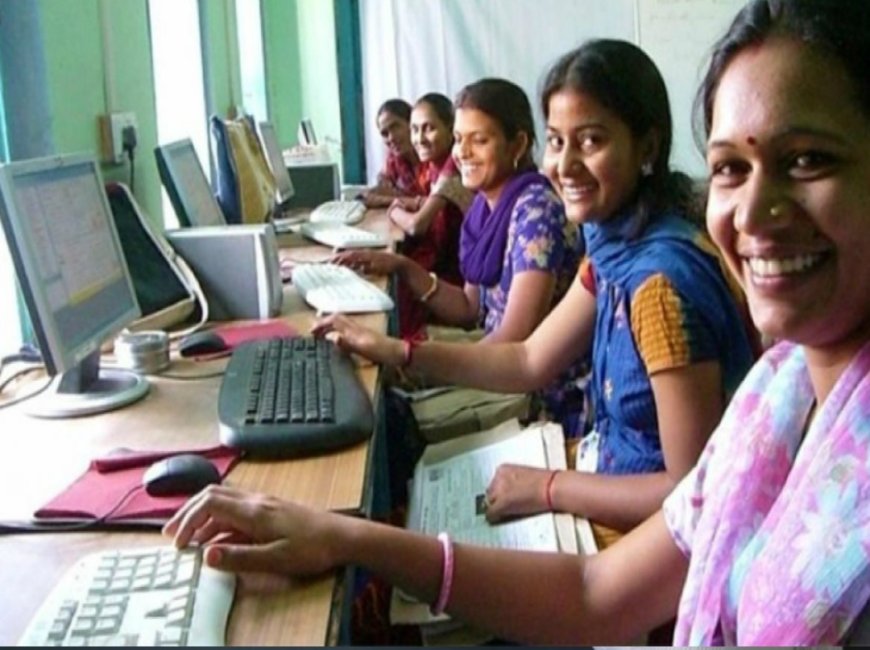
💻 4. Digital Education
Promoting online learning and digital literacy among girls.
🎓 5. Higher Education Opportunities
Encouraging girls to pursue higher education through scholarships and reservations.
📊 Current Status of Women’s Education in India
India has made significant progress:
Female literacy rate has increased over the years
More girls are enrolling in schools and colleges
Gender gap in education is decreasing
However, challenges still remain in rural and underdeveloped regions.
⚠️ Challenges in Women’s Education
❌ 1. Poverty
Many families cannot afford education for girls.
❌ 2. Social Barriers
Early marriage
Gender discrimination
Cultural restrictions
❌ 3. Safety Concerns
Parents hesitate to send girls to distant schools.
❌ 4. Dropout Rates
Girls often leave school due to household responsibilities.
❌ 5. Digital Divide
Limited access to technology in rural areas affects learning.
🌍 Role of NGOs and Society
Many organizations work to promote women’s education:
Provide scholarships
Run awareness campaigns
Build schools in rural areas
Community participation is essential for success.
💡 Impact of Women’s Education
👩⚕️ Economic Impact
Educated women join the workforce and contribute to the economy.
👩👧 Social Impact
They make informed decisions about health, family, and education.
🌱 National Development
Women’s education leads to sustainable growth and social progress.
🔮 Future of Women’s Education in India
The future depends on:
Effective implementation of policies
Use of technology
Social awareness
Government and community cooperation
India aims to achieve 100% literacy and gender equality in education.
🪔 Conclusion
Women’s education in India has come a long way, from social restrictions to policy-driven empowerment. The National Education Policy 2020 and various government schemes have created new opportunities for girls and women.
However, true progress requires continuous efforts to remove social barriers and ensure equal access to quality education. Educating a woman means educating a family, a community, and ultimately the nation.