
Growth of Modern Education in Odisha
Odisha, a state on the eastern coast of India, has witnessed remarkable progress in the field of modern education over the years. From a time when education was limited to traditional learning systems and confined to a small section of society, Odisha has evolved into a state with a growing network of schools, colleges, universities, and professional institutions. The journey of modern education in Odisha reflects social reform, government initiatives, and the collective efforts of educators and communities.
 Avya7800
Historical Background of Education in Odisha
Before the advent of modern education, Odisha primarily followed traditional systems of learning such as Gurukuls, Pathshalas, and Madrasas. Education was mainly focused on religious teachings, scriptures, and basic literacy. Access to education was limited, and only certain sections of society benefited from it.
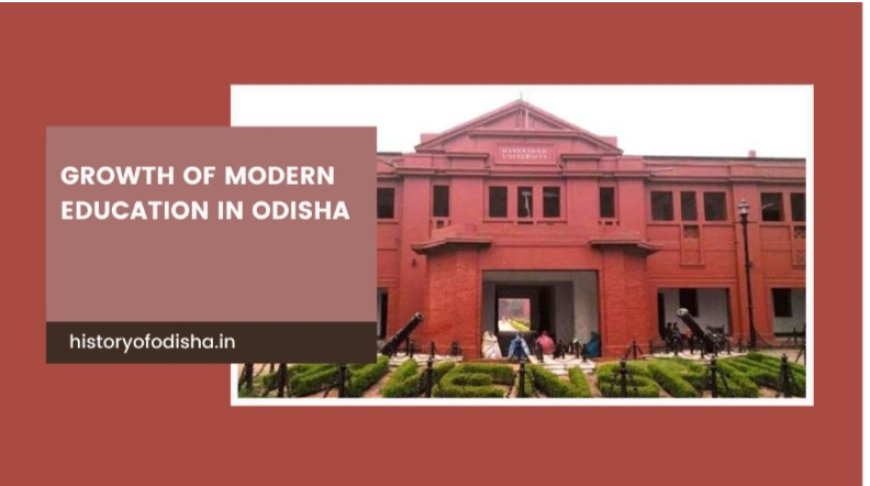
The introduction of modern education began during the British colonial period. Western-style education was introduced with an emphasis on subjects like science, mathematics, English, and history. Schools and colleges were established, marking the beginning of a structured educational system in Odisha.
However, progress was slow due to poverty, lack of awareness, and limited infrastructure. Education was still not accessible to the majority of people, especially those in rural and tribal areas.
Role of Social Reformers
The growth of modern education in Odisha was greatly influenced by social reformers who recognized the importance of education for social and economic development.
One of the most prominent figures was Madhusudan Das, who is often regarded as the architect of modern Odisha. He emphasized the importance of education and worked towards establishing institutions and promoting literacy.
Another important figure was Gopabandhu Das, who founded the Satyabadi School. His vision was to provide value-based education that combined modern knowledge with moral and cultural values.
These reformers played a crucial role in spreading awareness about education and encouraging people to send their children to school.
Development After Independence
After India gained independence in 1947, the government took several steps to improve the education system in Odisha. Education was recognized as a fundamental tool for development, and efforts were made to expand access to schools and colleges.
Primary and secondary education received significant attention. Schools were established in rural areas to ensure that children from all backgrounds could access education. The government also introduced policies to promote free and compulsory education.
Higher education also saw growth with the establishment of universities and colleges. Utkal University, one of the oldest universities in the state, played a key role in providing higher education and promoting research.
Expansion of Educational Institutions
Over the years, Odisha has seen a rapid increase in the number of educational institutions. Today, the state has a wide network of schools, colleges, engineering institutions, medical colleges, and universities.
Institutions like Indian Institute of Technology Bhubaneswar and National Institute of Technology Rourkela have brought national and international recognition to the state. These institutions offer high-quality education in engineering, technology, and research.
The establishment of professional colleges in fields like medicine, management, law, and education has further strengthened the higher education system in Odisha.
Focus on Primary Education
Primary education has been a major focus area for the government. Various schemes have been introduced to improve enrollment and reduce dropout rates.
Programs like the Mid-Day Meal Scheme have encouraged children to attend school by providing nutritious meals. Free textbooks, uniforms, and scholarships have made education more accessible to economically weaker sections.
Efforts have also been made to improve the quality of teaching by training teachers and upgrading school infrastructure.
Education in Rural and Tribal Areas
Odisha has a significant tribal population, and providing education in these areas has been a challenge. However, the government has taken several initiatives to address this issue.
Residential schools, hostels, and special programs have been introduced to ensure that children from tribal communities receive education. Efforts have also been made to teach in local languages to make learning more effective.
Non-governmental organizations (NGOs) and community groups have also played a role in promoting education in remote areas.
Women’s Education
The growth of women’s education in Odisha has been a significant achievement. In the past, girls had limited access to education due to social and cultural barriers.
Today, there has been a noticeable increase in female literacy rates. Government schemes, awareness campaigns, and scholarships have encouraged families to educate their daughters.
Women are now pursuing higher education and professional careers, contributing to the overall development of the state.
Role of Technology in Education
In recent years, technology has played a crucial role in transforming education in Odisha. Digital classrooms, online learning platforms, and smart teaching methods have improved the quality of education.
During the COVID-19 pandemic, online education became essential, and the government introduced digital initiatives to ensure continuity of learning.
Platforms like e-learning portals and virtual classrooms have made education more accessible and interactive.
Skill Development and Vocational Education
To meet the demands of a modern economy, Odisha has focused on skill development and vocational education. Training programs have been introduced to equip students with practical skills and improve employability.
Institutions and training centers offer courses in areas like IT, healthcare, agriculture, and manufacturing. These programs help students gain hands-on experience and prepare for the job market.
Challenges in Education
Despite significant progress, Odisha still faces challenges in the education sector.
Infrastructure Gaps: Some rural schools lack proper facilities such as classrooms, toilets, and electricity.
Teacher Shortage: There is a need for more trained teachers in remote areas.
Dropout Rates: Although reduced, dropout rates are still a concern, especially among economically weaker sections.
Quality of Education: Ensuring quality education across all regions remains a challenge.
Addressing these issues is essential for further improving the education system.
Government Initiatives and Reforms
The government of Odisha has launched several initiatives to strengthen the education system. Policies focus on improving access, quality, and inclusivity.
Programs for teacher training, infrastructure development, and curriculum improvement have been implemented. Special attention is given to marginalized communities to ensure equal opportunities.
The state is also aligning its education policies with national initiatives to enhance learning outcomes.
Impact of Modern Education
The growth of modern education has had a profound impact on Odisha’s society and economy.
Increased literacy rates
Improved employment opportunities
Social awareness and empowerment
Economic development
Education has played a key role in reducing poverty and promoting social equality.
Future Prospects
The future of education in Odisha looks promising. With continued investment in infrastructure, technology, and skill development, the state is likely to achieve further progress.
Focus on digital education, research, and innovation will help Odisha compete at national and global levels. Collaboration between government, institutions, and private sectors will be crucial for sustainable growth.
Conclusion
The growth of modern education in Odisha is a story of transformation and progress. From traditional learning systems to modern institutions, the state has come a long way in providing education to its people.
The efforts of social reformers, government initiatives, and community participation have played a vital role in this journey. While challenges remain, the continuous focus on improvement and innovation ensures a brighter future.