Description of the gas crisis in India,
Here is a detailed and well-structured description of the gas crisis in India, written in simple and informative language.
 Avya7800
🔥 Gas Crisis in India – Detailed Description
🌍 Introduction
Energy is essential for the development of any country. In India, natural gas plays a vital role in households, industries, transportation, and power generation. It is considered a cleaner fuel compared to coal and oil.
However, India has been facing a gas crisis in recent years due to rising demand, supply shortages, global price fluctuations, and infrastructure challenges. This crisis affects economic growth, energy security, and daily life.
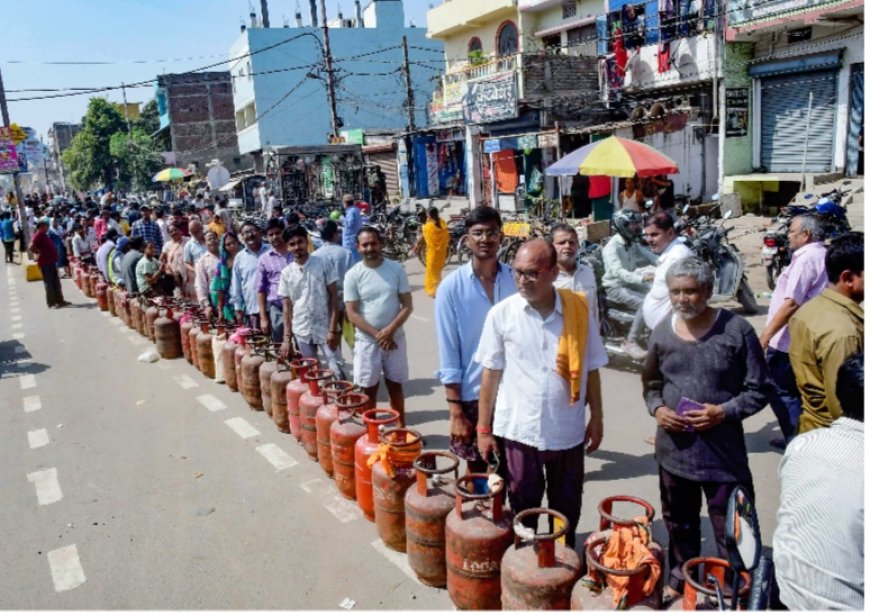
🧾 What is the Gas Crisis?
The gas crisis refers to the shortage or high cost of natural gas supply, making it difficult for industries and households to meet their energy needs.
Key Issues:
Insufficient domestic production
High import dependency
Rising prices
Supply disruptions
📊 Importance of Natural Gas in India
Natural gas is widely used in:
Cooking (LPG cylinders)
Electricity generation
Fertilizer production
Industrial processes
It is also promoted as a clean energy source.
⛽ Types of Gas Used in India
1. LPG (Liquefied Petroleum Gas)
Used for cooking in households
2. PNG (Piped Natural Gas)
Supplied through pipelines
3. CNG (Compressed Natural Gas)
Used in vehicles
📉 Causes of Gas Crisis
🌍 1. High Import Dependency
India imports a large portion of its natural gas.
Problems:
Dependence on other countries
Exposure to global price changes
💰 2. Rising Global Prices
Global events affect gas prices.
Example:
Russia-Ukraine War
This conflict disrupted global energy supply and increased prices.
🛢️ 3. Low Domestic Production
India’s natural gas production is limited.
Reasons:
Declining reserves
Lack of exploration
Technical challenges
📦 4. Supply Chain Disruptions
Gas supply depends on transportation and storage.
Issues:
Limited pipeline network
Port congestion
Storage shortages
🌡️ 5. Increasing Demand
Demand for gas is rising due to:
Urbanization
Industrial growth
Government push for clean energy
Supply is not keeping pace with demand.
🏭 6. Industrial Consumption
Industries consume large amounts of gas.
Impact:
Shortage for other sectors
Increased competition for supply
🌾 7. Fertilizer Sector Dependence
Gas is essential for fertilizer production.
Problem:
Shortage affects agriculture
Increases food production costs
⚖️ 8. Policy and Pricing Issues
Government policies sometimes create challenges.
Issues:
Price controls
Subsidy burden
Regulatory delays
⚠️ Impact of Gas Crisis
🏠 1. Household Impact
Increase in LPG cylinder prices
Financial burden on families
🏭 2. Industrial Impact
Reduced production
Increased costs
⚡ 3. Power Sector Impact
Gas-based power plants face shortages
Electricity supply issues
🌾 4. Agricultural Impact
Fertilizer production affected
Higher farming costs
💸 Economic Impact
The gas crisis affects the economy:
Inflation increases
Production costs rise
Trade deficit widens
🌍 Environmental Impact
While gas is cleaner than coal, the crisis leads to:
Increased use of coal
Higher pollution levels
🏛️ Government Initiatives
The government of India has taken steps:
Expanding pipeline networks
Promoting domestic production
Encouraging renewable energy
🌱 Shift to Renewable Energy
To reduce dependence on gas:
Solar energy
Wind energy
Bioenergy
These alternatives are being promoted.
🔬 Role of Technology
Technology can help solve the crisis:
Improved exploration techniques
Efficient gas storage
Smart distribution systems
🌐 Global Context
India is part of the global energy market.
Influencing factors:
International supply chains
Geopolitical tensions
Market fluctuations
🌟 Possible Solutions
⛽ 1. Increase Domestic Production
Explore new gas reserves
Invest in technology
🚚 2. Improve Infrastructure
Expand pipelines
Develop storage facilities
🌍 3. Diversify Energy Sources
Use renewable energy
Reduce dependency on imports
💰 4. Policy Reforms
Stable pricing policies
Better subsidy management
📢 5. Awareness and Efficiency
Promote energy saving
Encourage efficient usage
🧠 Role of Consumers
People can help by:
Using gas efficiently
Avoiding wastage
Switching to alternative energy sources
🔮 Future Outlook
India aims to increase the share of natural gas in its energy mix. However, achieving this goal requires:
Strong policies
Infrastructure development
Sustainable practices
📌 Conclusion
The gas crisis in India is a complex issue caused by rising demand, import dependency, global price fluctuations, and supply challenges. It affects households, industries, and the overall economy.
To overcome this crisis, India must focus on increasing domestic production, improving infrastructure, and promoting renewable energy. With proper planning and implementation, the country can ensure energy security and sustainable development.