A computer is one of the most important inventions of modern
The study and development of computers fall under the field of Computer Science, which focuses on algorithms, programming, and data processing.
 Avya7800
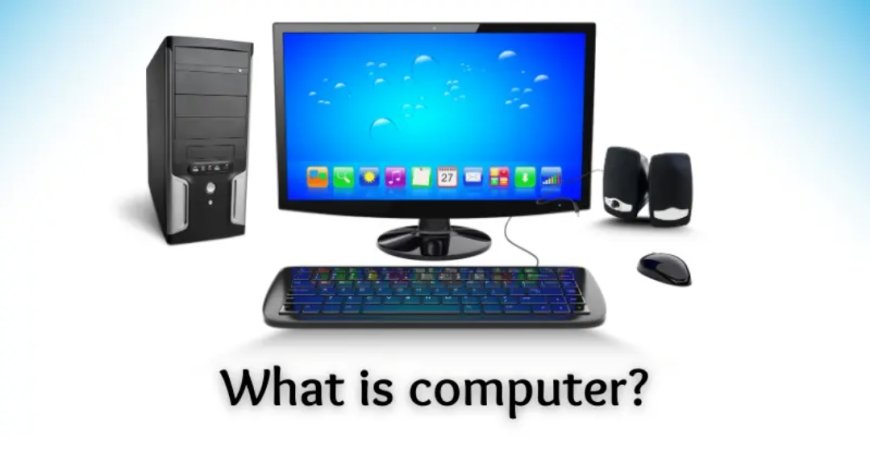
1. Definition of a Computer
A computer is a machine that:
Accepts input (data)
Processes the data
Produces output (information)
Stores the data for future use
It works on the principle of Input → Process → Output → Storage.
2. History of Computers
The development of computers has gone through several stages:
(a) Early Calculating Devices
The earliest tool was the abacus, used for basic arithmetic operations.
(b) Mechanical Computers
Charles Babbage designed the Analytical Engine, considered the first concept of a modern computer.
(c) Electronic Computers
The first electronic computer, ENIAC, was developed in the 1940s. It was large, expensive, and used vacuum tubes.
(d) Modern Computers
Today’s computers are smaller, faster, and more powerful due to advancements in technology.
3. Generations of Computers
Computers have evolved through five generations:
First Generation (1940–1956)
Vacuum tubes
Large and expensive
Second Generation (1956–1963)
Transistors
Smaller and faster
Third Generation (1964–1971)
Integrated circuits
Fourth Generation (1971–Present)
Microprocessors
Personal computers
Fifth Generation (Present and Future)
Artificial Intelligence
Advanced computing systems
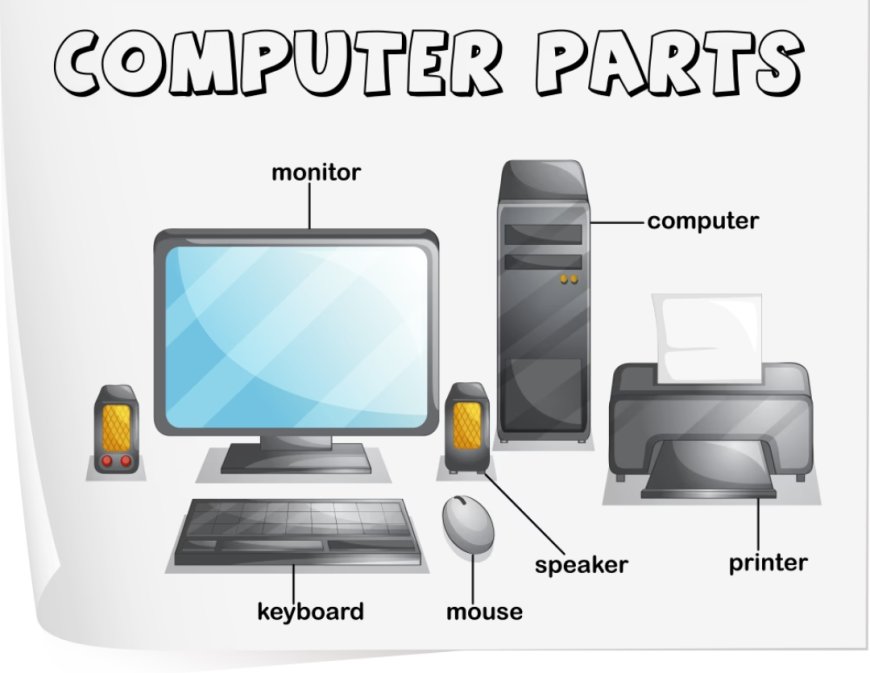
4. Components of a Computer
A computer system consists of two main parts:
(a) Hardware
Physical parts of the computer:
Monitor
Keyboard
Mouse
CPU
The CPU (Central Processing Unit) is the brain of the computer.
(b) Software
Programs that tell the computer what to do:
Operating systems
Applications
Examples include Microsoft Windows and Linux.
5. Types of Computers
Computers are classified into different types:
(a) Supercomputers
Used for complex calculations like weather forecasting.
(b) Mainframe Computers
Used by large organizations for data processing.
(c) Personal Computers
Used by individuals (desktops, laptops).
(d) Tablets and Smartphones
Portable computing devices used daily.
6. Functions of a Computer
Computers perform various functions:
Calculation
Data storage
Communication
Automation
They can perform millions of operations in seconds.
7. Input and Output Devices
Input Devices:
Keyboard
Mouse
Scanner
Output Devices:
Monitor
Printer
Speakers
These devices help users interact with computers.
8. Role of Internet in Computing
The invention of the internet has transformed computers into powerful communication tools.
The Internet allows:
Email communication
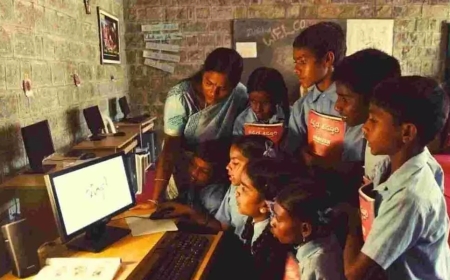
Online education
E-commerce
Social networking
9. Uses of Computers
(a) Education
Online learning
Research
Digital classrooms
(b) Business
Accounting
Data management
Communication
(c) Healthcare
Medical records
Diagnosis
Research
(d) Entertainment
Games
Movies
Music
(e) Government
E-governance
Public services
10. Advantages of Computers
High speed
Accuracy
Large storage capacity
Automation
Connectivity
Computers save time and improve efficiency.
11. Disadvantages of Computers
Cybercrime
Health issues (eye strain, posture problems)
Job displacement due to automation
Addiction
Proper usage is important to avoid these problems.
12. Computer Programming
Programming is the process of writing instructions for computers.
Languages include:
C
Java
Python
Programming is essential for developing software and applications.
13. Artificial Intelligence
Modern computers are becoming smarter with Artificial Intelligence (AI).
AI enables:
Voice assistants
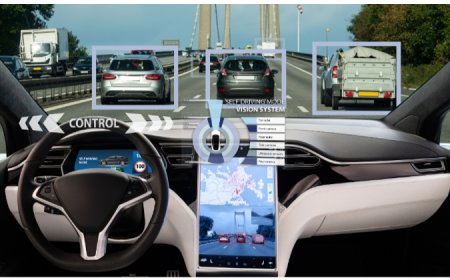
Self-driving cars
Smart systems
It represents the future of computing.
14. Computer Security
With increasing use, security is important:
Protecting data
Preventing hacking
Using antivirus software
Cybersecurity ensures safe use of computers.
15. Impact of Computers on Society
Computers have transformed society:
Faster communication
Global connectivity
Digital economy
Innovation
They have made the world more connected and efficient.
16. Future of Computers
The future includes:
Quantum computing
Advanced AI
Faster processing systems
More automation
These developments will further change the world.
Conclusion
Computers are one of the most powerful tools created by humans. From simple calculations to complex problem-solving, they play a vital role in every field. Rooted in the study of Computer Science, computers continue to evolve and shape the future.
While they offer numerous benefits like speed, accuracy, and convenience, responsible use is necessary to avoid negative effects. As technology advances, computers will become even more important in improving human life and solving global challenges.