
Upcoming 6G in India The evolution of wireless communication has transformed human life—
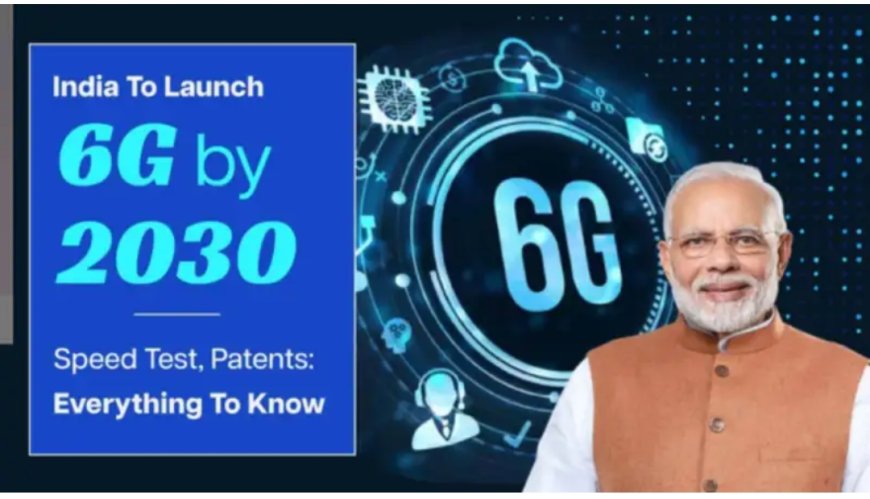
The Government of India launched an ambitious roadmap called the “Bharat 6G Vision”, which outlines the country’s plan to roll out 6G services by around 2030.
 Avya7800
What is 6G Technology?
6G is the successor to 5G and is expected to deliver:
Speeds up to 100 times faster than 5G
Ultra-low latency (almost zero delay)
Intelligent and AI-driven networks
Seamless integration of physical and digital worlds
Unlike previous generations, 6G will not only improve communication but also enable futuristic technologies like:
Holographic communication
Smart cities
Autonomous vehicles
Advanced robotics
Brain-computer interfaces
India’s 6G Vision
India’s journey toward 6G officially began in March 2023, when the government unveiled the Bharat 6G Vision document.
Key Goals of Bharat 6G Vision:
Make India a global leader in 6G technology by 2030
Develop indigenous (Made in India) telecom technologies
Ensure affordable and inclusive connectivity
Promote sustainability and energy efficiency
The vision is based on three main principles:
Affordability
Sustainability
Ubiquity (connectivity for all)
Bharat 6G Alliance
To achieve these goals, India established the Bharat 6G Alliance, which brings together:
Government agencies
Private companies
Startups
Academic institutions
This alliance focuses on research, innovation, and global collaboration.
India is also working with global organizations like:
International Telecommunication Union (ITU)
3GPP (global telecom standards body)
The aim is to contribute 10% of global 6G patents and standards.
Investment and Research in 6G
India has significantly increased investment in 6G research.
104 research projects approved (2026)
Total funding of around ₹271 crore
These projects focus on:
Advanced communication systems
Spectrum research
AI-driven networks
Testbeds and prototypes
The Telecom Technology Development Fund (TTDF) supports these initiatives and encourages indigenous innovation.
Phases of 6G Development in India
India’s 6G mission is divided into two phases:
Phase 1 (2023–2025)
Research and development
Building testbeds
Identifying key technologies
Phase 2 (2025–2030)
Field trials
Commercial deployment
Global collaboration
Key Technologies in 6G
6G will rely on several advanced technologies:
1. Artificial Intelligence (AI)
AI will be integrated into networks to:
Optimize performance
Predict traffic
Improve security
2. Terahertz (THz) Communication
6G will use higher frequency bands (THz spectrum) for ultra-fast data transfer.
3. Quantum Communication
Provides:
Ultra-secure communication
Faster data processing
4. Satellite Integration
6G will combine:
Ground networks
Satellite systems
This will provide connectivity even in remote areas.
5. Reconfigurable Intelligent Surfaces
These surfaces will improve signal strength and coverage in complex environments.
Applications of 6G in India
6G will bring revolutionary changes across sectors:
1. Healthcare
Remote surgeries
Real-time health monitoring
AI-based diagnostics
2. Education
Virtual classrooms
Immersive learning using VR/AR
3. Agriculture
Smart farming
AI-driven crop monitoring
4. Transportation
Autonomous vehicles
Smart traffic systems
5. Industry (Industry 5.0)
Fully automated factories
Robotics and machine learning
Role of Startups and Academia
Indian startups and academic institutions are playing a crucial role.
Examples:
IITs working on 6G prototypes
IIITs developing new communication systems
Startups creating innovative telecom solutions
Collaborations between academia and industry are helping India stay competitive globally.
India’s Global Position in 6G
India is emerging as a strong player in global telecom technology.
Key achievements:
Rapid 5G rollout across the country
Strong IT and software ecosystem
Large talent pool
India aims to move from: 👉 Technology consumer → Technology creator
The country is actively participating in global standard-setting for 6G.
Challenges in 6G Development
Despite progress, India faces several challenges:
1. High Cost
Developing 6G infrastructure requires massive investment.
2. Spectrum Management
Allocating high-frequency spectrum is complex.
3. Skilled Workforce
Need for experts in AI, quantum tech, and telecom.
4. Cybersecurity Risks
Advanced networks may face new types of cyber threats.
5. Rural Connectivity
Ensuring equal access in rural areas remains a challenge.
Opportunities for India
6G presents huge opportunities:
Job creation in tech sector
Growth of startups
Boost to digital economy
Leadership in global telecom industry
India’s focus on self-reliance (Atmanirbhar Bharat) will strengthen its position.
Future Timeline of 6G in India
Expected milestones:
2023–2025: Research and testbeds
2026–2028: Trials and pilot projects
2030: Commercial rollout
This timeline aligns with global 6G development trends.
Impact on Digital India
6G will strengthen India’s digital transformation:
Faster internet in rural areas
Smart governance
Digital inclusion
Better public services
It will also support initiatives like:
Smart Cities Mission
Digital India
Industry 4.0
Environmental and Social Impact
6G is designed to be:
Energy-efficient
Environment-friendly
It will help:
Reduce carbon emissions
Optimize energy use
Promote sustainable development
Conclusion
Upcoming 6G in India represents a new era of science and technology. With strong government support, increasing investments, and active participation from academia and industry, India is on track to become a global leader in 6G.
The Bharat 6G Vision is not just about faster internet—it is about transforming society, economy, and governance. From smart cities to advanced healthcare, 6G will redefine how people live and interact with technology