Kerala Battles Relentless Monsoon Rains: Fatalities Rise as Rescue and Relief Operations Continue Across the State
Kerala Battles Relentless Monsoon Rains: Fatalities Rise as Rescue and Relief Operations Continue Across the State
 Madhavisanvi
Kerala Battles Relentless Monsoon Rains: Fatalities Rise as Rescue and Relief Operations Continue Across the State
Kerala is once again facing the fury of the southwest monsoon, with relentless rainfall triggering floods, landslides, waterlogging, and widespread disruption across several districts. Over the past few days, heavy downpours have claimed lives, damaged homes and infrastructure, displaced families, and disrupted transport services. Rescue teams from the State Disaster Management Authority, Fire and Rescue Services, police, National Disaster Response Force (NDRF), and local volunteers remain engaged in evacuation and relief operations as authorities monitor the evolving weather situation. Recent reports indicate that at least eight people have died and several others remain missing, while the India Meteorological Department (IMD) has continued weather alerts for multiple districts.
Monsoon Intensifies Across Kerala
The southwest monsoon has brought persistent heavy rainfall to large parts of Kerala, particularly affecting northern and central districts. Rivers have swollen beyond danger levels, low-lying areas remain inundated, and landslides have been reported in hilly regions. Districts including Kannur, Wayanad, Kozhikode, Malappuram, Idukki, Ernakulam, Thrissur, and Pathanamthitta have experienced varying degrees of flooding and disruption. The IMD has issued yellow, orange, and red alerts for different districts as rainfall intensity changes, warning of heavy rain, strong winds, and hazardous conditions at sea.
Loss of Lives and Missing Persons
The continuing rain-related incidents have resulted in multiple fatalities. Deaths have occurred due to landslides, flooding, collapsing structures, falling trees, electrocution, and drowning. Rescue agencies are also searching for several people reported missing after landslides and flood incidents. Authorities have urged residents living in vulnerable areas to move to safer locations before conditions deteriorate further.
Landslides Create Major Challenges
Landslides have emerged as one of the biggest threats during the present spell of heavy rain. Hill districts, especially Wayanad and nearby regions, remain highly vulnerable because continuous rainfall has saturated the soil. Several roads have been blocked after mud, rocks, and uprooted trees slid onto highways, isolating villages and slowing rescue operations. In some areas, emergency workers have used heavy machinery to clear debris while search teams continue looking for those feared trapped.
Floodwaters Disrupt Normal Life
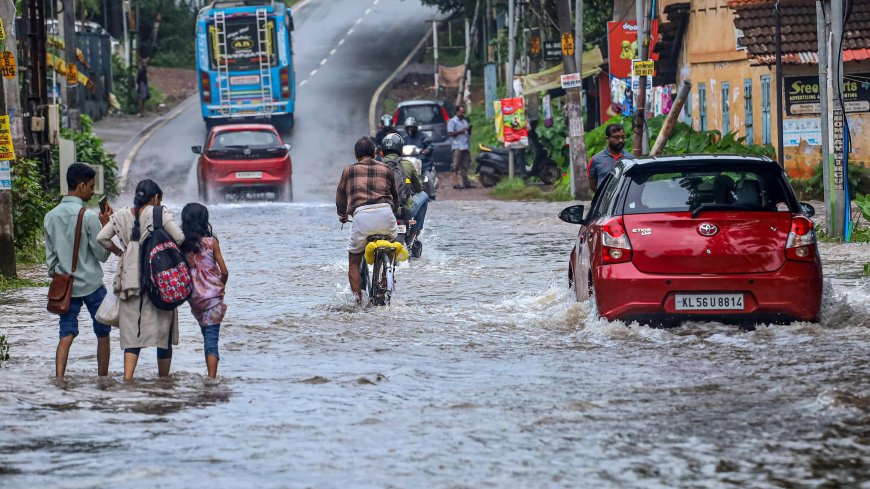
Flooding has affected thousands of residents across Kerala. Water entered homes, shops, schools, hospitals, and government offices in several districts. Many families were forced to leave their homes and seek shelter in relief camps established by local administrations.
Roads in many towns remained submerged, making movement difficult for emergency vehicles and residents. Public transportation experienced delays and cancellations as authorities prioritized public safety.
Rescue Operations Continue
The Kerala government has mobilized multiple agencies to carry out rescue and evacuation efforts.
Teams from the Fire and Rescue Services, NDRF, police, and trained local volunteers are using boats, rescue equipment, and emergency vehicles to evacuate stranded families. Fishermen, who played a crucial role during previous Kerala floods, have also assisted rescue efforts in some coastal and flooded regions.
Emergency control rooms remain operational around the clock to coordinate rescue missions and respond to distress calls.
Relief Camps Provide Shelter
District administrations have established temporary relief camps for displaced families.
These camps provide:
-
Safe accommodation
-
Drinking water
-
Cooked food
-
Medical assistance
-
Sanitation facilities
-
Essential medicines
-
Support for children and elderly people
Health officials are also monitoring relief camps to prevent outbreaks of waterborne diseases.
IMD Weather Alerts
The India Meteorological Department continues to monitor rainfall across Kerala closely.
Yellow alerts remain in force for several districts, while warnings for strong winds and rough sea conditions have also been issued. Fishermen have been advised not to venture into the sea due to dangerous wave conditions, and coastal residents have been asked to remain alert.
Kannur Among the Worst-Hit Districts
Kannur has recorded exceptionally heavy rainfall, with some areas receiving around 320 mm in a short period. The intense rain caused severe flooding, overflowing rivers, waterlogging, and disruptions to road transport. Authorities have released water from certain dams after reservoir levels rose significantly.
Schools and Public Institutions Affected
Heavy rainfall has disrupted educational activities across Kerala.
Many schools and colleges suspended classes or shifted examinations due to safety concerns. Educational authorities advised students and parents to follow official announcements regarding reopening schedules.
Transportation Hit Hard
Flooded roads, landslides, and fallen trees have disrupted transportation across the state.
Several state highways and rural roads became impassable, while traffic moved slowly in urban centres due to waterlogging. Authorities advised people to avoid unnecessary travel, particularly in hilly regions where landslide risks remain high.
Agriculture Suffers Heavy Damage
Farmers have suffered extensive losses as agricultural fields remain submerged.
Rice paddies, vegetable farms, rubber plantations, banana plantations, and spice crops have been affected by continuous rainfall and flooding.
Agricultural experts estimate that crop losses may increase if rainfall continues for several more days.
Impact on Tourism
Kerala's tourism industry has also been affected.
Several tourist destinations, particularly hill stations, trekking routes, waterfalls, and eco-tourism sites, have either been closed temporarily or restricted due to safety concerns.
Tourists have been advised to postpone visits to landslide-prone regions until weather conditions improve.
Health Concerns Increase
Floods often increase the risk of waterborne diseases.
Health authorities have advised residents to:
-
Drink boiled or purified water.
-
Avoid floodwater whenever possible.
-
Maintain hygiene.
-
Report symptoms of fever or infection promptly.
-
Keep emergency medicines readily available.
Medical teams have been deployed to relief camps and affected villages.
Government Response
The Kerala government continues to review the evolving situation through district collectors, disaster management officials, and emergency response agencies.
Officials are monitoring rainfall, reservoir levels, river flow, and vulnerable locations around the clock. Evacuation orders have been issued where necessary, while relief materials continue to reach affected communities.
Community Participation
Local communities have played an important role in rescue efforts.
Volunteers, youth organizations, social workers, fishermen, and charitable organizations have distributed food, clothing, medicines, and drinking water to flood-affected families.
Many residents have also opened community halls and religious institutions to shelter displaced people.
Climate Change and Extreme Rainfall
Experts increasingly warn that climate change is contributing to more frequent episodes of extreme rainfall across South Asia.
Although monsoon rainfall is a normal seasonal phenomenon, unusually intense cloudbursts and prolonged heavy rainfall have increased the risks of flash floods and landslides in ecologically sensitive regions such as Kerala's Western Ghats.
Public Safety Advisory
Authorities continue to advise residents to:
-
Avoid unnecessary travel.
-
Stay away from swollen rivers.
-
Do not cross flooded roads.
-
Follow official weather bulletins.
-
Keep emergency supplies ready.
-
Cooperate with evacuation orders.
-
Avoid hill slopes during heavy rainfall.
The Kerala State Disaster Management Authority has also issued advisories regarding flooding, high waves, strong winds, and lightning.
Challenges Ahead
Even if rainfall decreases temporarily, authorities expect recovery to take time.
Cleaning flood-affected areas, restoring roads, repairing damaged infrastructure, and assisting displaced families will require coordinated efforts from government agencies, local bodies, and community organizations.
The possibility of additional rainfall means emergency services remain on high alert.