
Parliament & Governance: Government Introduces Indian Statistical Institute Bill, 2026 – A Major Reform for India's Premier Statistical Institution
Parliament & Governance: Government Introduces Indian Statistical Institute Bill, 2026 – A Major Reform for India's Premier Statistical Institution
 Madhavisanvi
Parliament & Governance: Government Introduces Indian Statistical Institute Bill, 2026 – A Major Reform for India's Premier Statistical Institution
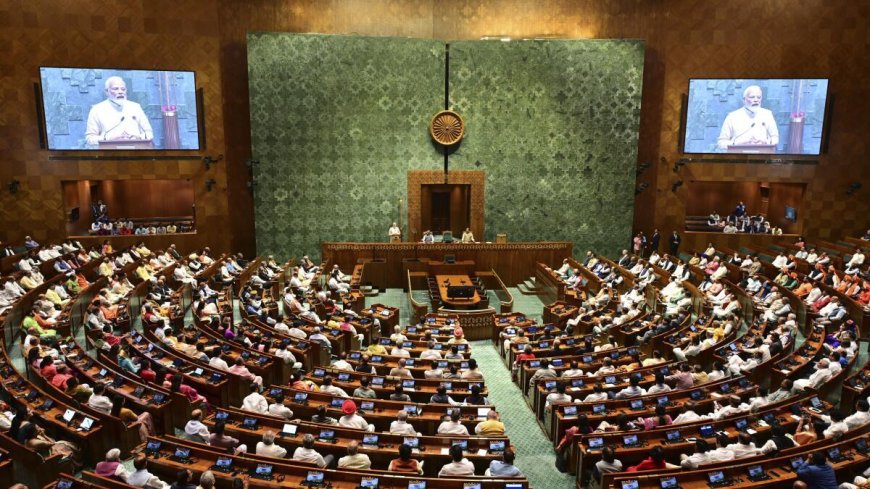
The Union Government has introduced the Indian Statistical Institute (ISI) Bill, 2026 in the Lok Sabha during the Monsoon Session of Parliament. The proposed legislation seeks to replace the Indian Statistical Institute Act, 1959, with a new legal framework designed to modernize the governance, administration, and academic functioning of one of India's most prestigious research institutions. The Bill proposes incorporating ISI as a statutory body corporate, establishing a new Board of Governors, and introducing an Academic Council to strengthen decision-making and align the institute with the growing needs of statistics, artificial intelligence (AI), data science, and official statistics.
Background
The Indian Statistical Institute, established in 1931 by the renowned statistician Prasanta Chandra Mahalanobis, has played a pioneering role in statistics, mathematics, computer science, economics, quality control, and national statistical systems. Over the decades, ISI has produced world-class researchers and has significantly contributed to India's planning, census operations, and statistical policymaking.
The current governance framework of ISI is based on legislation enacted more than six decades ago. According to the government, rapid advances in data science, digital technologies, artificial intelligence, and interdisciplinary research require a governance structure that is more modern, transparent, and responsive.
Why the Government Introduced the Bill
The Government has stated that the proposed legislation aims to:
-
Modernize the institute's administrative framework.
-
Strengthen accountability and governance.
-
Improve academic decision-making.
-
Enable quicker institutional reforms.
-
Enhance global competitiveness.
-
Support India's expanding data economy.
-
Promote excellence in research and innovation.
Officials argue that India's growing dependence on high-quality statistical systems and data-driven governance makes institutional reforms essential.
Key Features of the Bill
One of the most significant changes proposed in the Bill is the transformation of ISI into a statutory body corporate. This would provide the institute with a clearer legal identity and updated administrative powers.
The Bill proposes the creation of a Board of Governors, which would become the institute's principal governing authority. The Board would oversee administration, financial management, institutional planning, and long-term strategy.
It also proposes an Academic Council responsible for academic standards, research programmes, curriculum development, admissions, examinations, and collaborations with other institutions.
Governance Reforms
Supporters of the Bill argue that the existing governance model has become outdated.
The proposed Board of Governors is expected to:
-
Approve institutional policies.
-
Monitor financial performance.
-
Promote transparency.
-
Improve administrative efficiency.
-
Ensure better coordination between academic and administrative functions.
The Academic Council would focus on maintaining educational quality and encouraging research excellence.
Administrative Modernization
The Government believes the reforms will enable ISI to respond more quickly to emerging scientific and technological developments.
Areas expected to benefit include:
-
Recruitment of faculty.
-
Research funding.
-
International collaborations.
-
New academic programmes.
-
Industry partnerships.
-
Innovation initiatives.
Faster administrative decision-making is expected to improve the institute's ability to compete globally.
Strengthening Academic Excellence
The proposed reforms recognize that statistics today extends beyond traditional mathematical analysis.
Modern fields include:
-
Artificial Intelligence
-
Machine Learning
-
Big Data Analytics
-
Climate Data Analysis
-
Financial Statistics
-
Health Analytics
-
Digital Governance
-
Cybersecurity Analytics
The Government believes ISI should be equipped to expand its teaching and research in these rapidly growing disciplines.
Importance for India's Data Economy
India is increasingly relying on data for policymaking, digital governance, healthcare, agriculture, finance, education, and smart cities.
Institutions like ISI play an important role in:
-
Training statisticians.
-
Developing analytical methods.
-
Supporting government surveys.
-
Producing high-quality research.
-
Advising policymakers.
The Bill aims to strengthen these capabilities for the future.
Concerns Raised
While the Government has presented the Bill as a modernization measure, some faculty members, alumni, and experts have expressed concerns.
Among the issues raised are:
-
Possible reduction in institutional autonomy.
-
Greater government influence over appointments and governance.
-
Changes in the balance between academic independence and administrative oversight.
Some critics argue that governance reforms should preserve the institute's long-standing academic traditions while improving efficiency.
Potential Benefits
If implemented effectively, the proposed legislation could:
-
Improve institutional governance.
-
Enhance transparency.
-
Accelerate academic reforms.
-
Strengthen research infrastructure.
-
Encourage international collaborations.
-
Support emerging disciplines such as AI and data science.
-
Increase administrative efficiency.
These changes could help ISI maintain its position as one of India's leading research institutions.
Impact on Students and Researchers
Students may benefit from:
-
Updated academic programmes.
-
Greater research opportunities.
-
Improved industry partnerships.
-
Modern laboratories.
-
Expanded international collaborations.
-
Better administrative services.
Researchers could gain from quicker approvals, improved funding mechanisms, and stronger institutional support.
National Significance
The reform reflects India's broader emphasis on strengthening scientific and educational institutions to meet the demands of a data-driven economy.
As government departments increasingly depend on evidence-based policymaking, institutions capable of producing high-quality statistical research are becoming even more important.
Parliamentary Process
The Bill has been introduced in the Lok Sabha and will undergo the normal legislative process, including debate and consideration before any final enactment. During parliamentary discussions, members are expected to examine its governance provisions, academic implications, and safeguards for institutional autonomy.