RBI Keeps Repo Rate Unchanged at 5.25%: Balancing Growth and Inflation in a Changing Global Economy
RBI Keeps Repo Rate Unchanged at 5.25%: Balancing Growth and Inflation in a Changing Global Economy
 Madhavisanvi
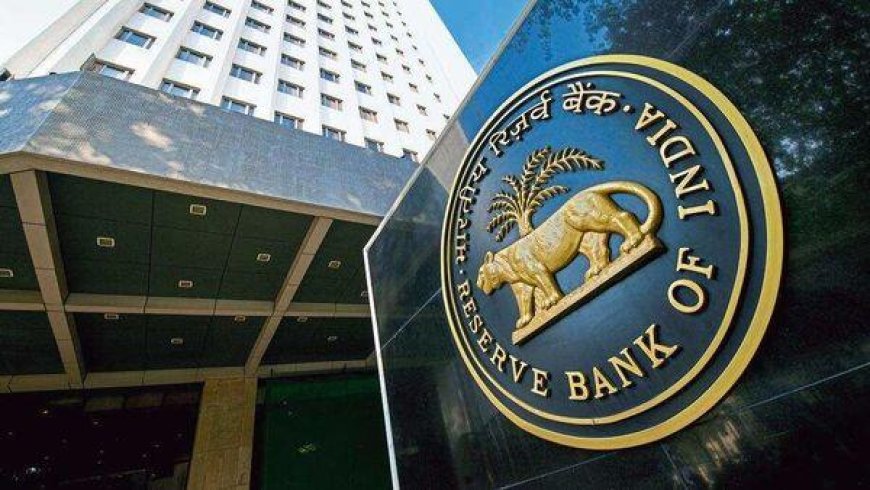
The Reserve Bank of India (RBI) has announced that it will keep the repo rate unchanged at 5.25%, continuing its cautious approach to monetary policy amid a mixed global economic environment. The decision reflects the central bank's confidence that inflation is gradually stabilizing while the Indian economy remains on a healthy growth path. Alongside the rate announcement, the RBI projected India's GDP growth at 6.7% for the financial year 2026–27, reaffirming the country's position as one of the fastest-growing major economies. The central bank also indicated that inflation is expected to stay within its target range despite uncertainties arising from global trade tensions, volatile commodity prices, and geopolitical developments.
This monetary policy decision is significant because the repo rate is one of the RBI's most powerful tools for managing inflation, encouraging economic growth, and maintaining financial stability. By leaving the rate unchanged, the RBI has signaled that it prefers to monitor evolving economic conditions rather than make immediate policy adjustments.
RBI Keeps Repo Rate Unchanged at 5.25%: Balancing Growth and Inflation in a Changing Global Economy
Introduction
The Reserve Bank of India (RBI), the country's central bank, plays a crucial role in maintaining economic stability through its monetary policy decisions. Every few months, the Monetary Policy Committee (MPC) meets to assess the state of the economy, inflation trends, financial markets, and global developments before deciding whether to increase, decrease, or maintain the repo rate.
In its latest monetary policy announcement, the RBI decided to keep the repo rate unchanged at 5.25% while maintaining a neutral policy stance. The central bank also projected India's Gross Domestic Product (GDP) growth at 6.7% for FY2026–27, highlighting strong domestic demand, robust investment activity, and steady consumption as key drivers of growth.
The announcement comes at a time when the global economy continues to face uncertainties, including geopolitical conflicts, volatile energy prices, supply chain disruptions, and changing monetary policies by major central banks such as the U.S. Federal Reserve and the European Central Bank.
Despite these challenges, India's economic outlook remains optimistic, supported by stable inflation, healthy banking sector performance, increasing government infrastructure spending, and growing private investment.
Understanding the Repo Rate
The repo rate is the interest rate at which commercial banks borrow money from the RBI for short periods against government securities.
It is one of the most important monetary policy instruments because changes in the repo rate directly affect borrowing costs across the economy.
When the RBI reduces the repo rate:
-
Banks can borrow money at lower costs.
-
Home loans become cheaper.
-
Business loans become more affordable.
-
Consumer spending generally increases.
-
Economic growth accelerates.
Conversely, when the RBI increases the repo rate:
-
Loans become more expensive.
-
Consumer demand slows.
-
Inflationary pressures ease.
-
Savings become more attractive.
Keeping the repo rate unchanged indicates that the RBI believes current interest rates are appropriate for balancing economic growth with price stability.
Why Did the RBI Keep the Repo Rate Unchanged?
The decision was based on several domestic and international factors.
1. Inflation Is Under Control
The RBI's primary objective is to maintain inflation around its medium-term target of 4%, with an acceptable range of 2% to 6%.
Recent inflation data suggest that:
-
Food inflation has moderated.
-
Fuel prices remain relatively stable.
-
Core inflation has softened.
-
Supply chains have improved.
Although weather-related risks and global commodity price fluctuations remain concerns, inflation has stayed within the RBI's comfort zone.
2. Strong Economic Growth
India continues to perform better than many major economies.
Key growth drivers include:
-
Rising manufacturing output
-
Expansion in services
-
Strong government infrastructure spending
-
Increasing private investment
-
Healthy exports of services
-
Stable consumer demand
The RBI believes these factors justify maintaining current policy settings.
3. Stable Financial Markets
India's banking system remains well-capitalized.
Banks have:
-
Lower levels of bad loans
-
Higher profitability
-
Improved credit growth
-
Better liquidity management
Stable financial institutions reduce the need for emergency monetary measures.
GDP Growth Projection of 6.7%
The RBI expects India's economy to grow by 6.7% during FY2026–27, making it one of the fastest-growing large economies globally.
Several factors support this optimistic outlook.
Government Infrastructure Investment
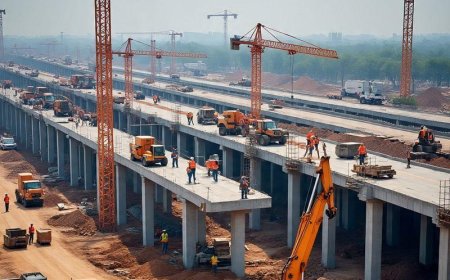
Massive public investments continue in:
-
Highways
-
Railways
-
Metro systems
-
Airports
-
Renewable energy
-
Digital infrastructure
Infrastructure spending generates employment while boosting long-term productivity.
Rising Domestic Consumption
India's expanding middle class continues to support demand for:
-
Housing
-
Automobiles
-
Electronics
-
Healthcare
-
Education
-
Tourism
Private consumption remains the largest contributor to GDP.
Manufacturing Growth
Government initiatives such as:
-
Make in India
-
Production Linked Incentive (PLI) schemes
-
Semiconductor manufacturing initiatives
are attracting domestic and foreign investment.
Manufacturing output continues to expand across multiple industries.
Digital Economy Expansion
India's digital economy is growing rapidly through:
-
UPI digital payments
-
E-commerce
-
Fintech innovation
-
Artificial intelligence
-
Cloud computing
-
Startup ecosystem
These sectors are creating jobs and improving productivity.
Inflation Outlook
Although inflation remains under control, the RBI continues to monitor several risks.
Food Prices
Uncertain monsoon conditions can affect:
-
Rice
-
Wheat
-
Vegetables
-
Pulses
Poor harvests often lead to temporary food inflation.
Global Oil Prices
India imports a large share of its crude oil.
Any increase in global oil prices can:
-
Raise transport costs
-
Increase manufacturing costs
-
Push inflation higher
Geopolitical Risks
Conflicts in different regions could disrupt:
-
Energy supplies
-
Shipping routes
-
International trade
These developments could increase inflationary pressures worldwide.
Neutral Monetary Policy Stance
A neutral stance means the RBI is neither committed to raising nor lowering interest rates immediately.
Instead, future decisions will depend on:
-
Inflation data
-
GDP growth
-
Employment
-
Global developments
-
Financial market stability
This flexible approach allows the RBI to respond quickly to changing conditions.
Impact on Home Loan Borrowers
Since the repo rate remains unchanged:
-
Existing floating-rate home loans are unlikely to become more expensive.
-
EMIs are expected to remain stable.
-
Housing demand may continue improving.
Homebuyers benefit from predictable borrowing costs.
Impact on Businesses
Stable interest rates provide certainty for businesses planning investments.
Companies may continue investing in:
-
New factories
-
Technology upgrades
-
Capacity expansion
-
Hiring employees
This supports long-term economic growth.
Impact on Investors
Equity markets generally welcome policy stability because it reduces uncertainty.
Investors will closely watch:
-
Corporate earnings
-
Inflation trends
-
Future RBI guidance
-
Global economic developments
Bond markets are also likely to remain stable in the near term.
Impact on Banks
Commercial banks benefit from:
-
Stable funding costs
-
Continued loan growth
-
Improved profitability
-
Strong credit demand
Banks may continue expanding lending to retail and corporate customers.
India's Position in the Global Economy
Many advanced economies continue to experience slower growth due to high interest rates and weak demand.
India, by contrast, benefits from:
-
A large domestic market
-
Young workforce
-
Expanding manufacturing base
-
Digital transformation
-
Stable macroeconomic policies
These strengths have made India an attractive destination for global investors.
Challenges Ahead
Despite the positive outlook, several risks remain.
Global Slowdown
Weak growth in major economies could reduce demand for Indian exports.
Commodity Price Volatility
Unexpected increases in energy or food prices could affect inflation.
Climate Change
Extreme weather events may disrupt agriculture and supply chains.
Financial Market Volatility
Changes in global interest rates or capital flows could affect India's financial markets.
Government and RBI Coordination
Economic stability depends on coordination between fiscal policy and monetary policy.
The government continues to invest in infrastructure, manufacturing, and social welfare, while the RBI focuses on maintaining price stability and financial stability.
Together, these policies aim to:
-
Create jobs
-
Encourage investment
-
Maintain inflation control
-
Support sustainable economic growth