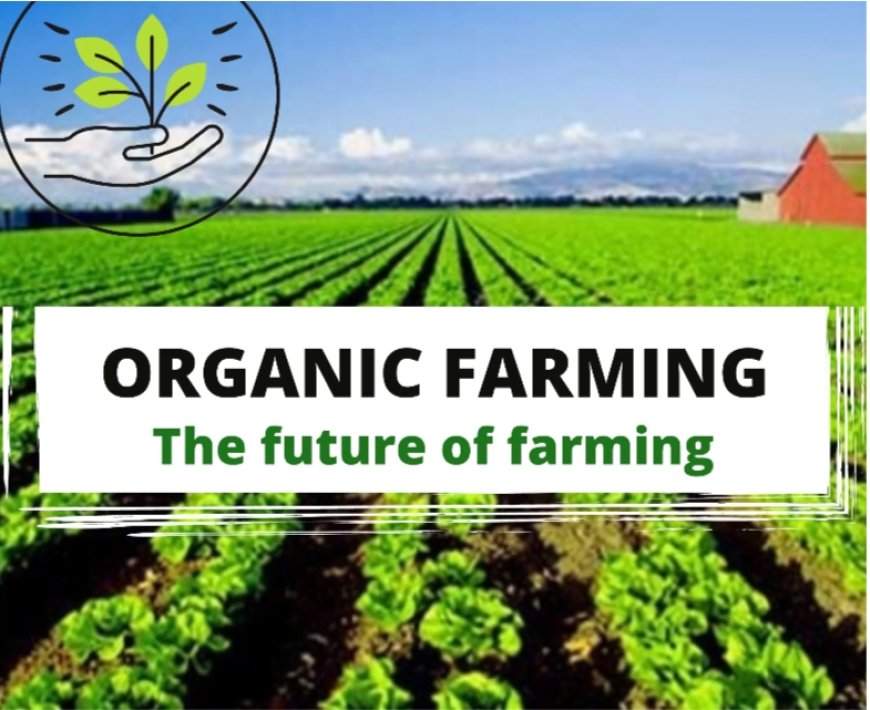
🌱 Organic Farming – The Future of Agriculture
Here is a detailed and well-structured description of organic farming as the future of agriculture, written in simple and informative language.
 Avya7800
Introduction
Agriculture is the backbone of the economy in countries like India and many parts of the world. For decades, farmers have relied on chemical fertilizers, pesticides, and intensive farming techniques to increase production. While these methods boosted yields, they also caused serious environmental and health problems.
In recent years, organic farming has emerged as a sustainable and eco-friendly alternative. It focuses on natural methods of cultivation that protect the environment, improve soil health, and produce safe food. Many experts believe that organic farming represents the future of agriculture.
🌿 What is Organic Farming?
Organic farming is a method of agriculture that avoids the use of synthetic chemicals such as fertilizers, pesticides, and genetically modified organisms (GMOs). Instead, it relies on natural processes.
Key Features:
Use of organic manure and compost
Crop rotation
Biological pest control
Natural fertilizers
The main goal is to maintain ecological balance and produce healthy food.
🧪 Principles of Organic Farming
Organic farming is based on four main principles:
1. 🌱 Health
It promotes the health of soil, plants, animals, and humans.
2. 🌍 Ecology
Farming should work in harmony with nature.
3. ⚖️ Fairness
Ensures fairness for farmers, workers, and consumers.
4. 🛡️ Care
Protects the environment for future generations.
🌾 Importance of Organic Farming
Organic farming plays a vital role in modern agriculture.
Benefits:
Protects the environment
Produces chemical-free food
Improves soil fertility
Reduces pollution
🧴 Problems with Chemical Farming
Before understanding the future, it is important to know the issues with conventional farming.
Negative Effects:
Soil degradation
Water pollution
Health problems
Loss of biodiversity
These problems have increased the need for organic farming.
🌱 Advantages of Organic Farming
🥗 1. Healthy Food
Organic food is free from harmful chemicals and pesticides.
🌍 2. Environmental Protection
Reduces pollution
Protects ecosystems
🌾 3. Soil Fertility
Organic methods improve soil structure and nutrients.
💧 4. Water Conservation
Less contamination of water sources.
🐝 5. Biodiversity Protection
Supports insects, birds, and wildlife.
🧑🌾 Economic Benefits
Organic farming can benefit farmers economically.
Advantages:
Higher market prices
Growing demand
Reduced input costs
However, initial transition may be costly.
🌎 Global Demand for Organic Products
Demand for organic food is increasing worldwide.
Reasons:
Health awareness
Environmental concerns
Better taste and quality
Countries across the globe are adopting organic practices.
🇮🇳 Organic Farming in India
India has great potential for organic farming.
Reasons:
Large agricultural base
Traditional farming knowledge
Government support
States like Sikkim have become fully organic.
🏛️ Government Initiatives
The government promotes organic farming through:
Subsidies
Training programs
Certification support
These initiatives encourage farmers to adopt organic methods.
⚠️ Challenges of Organic Farming
Despite its benefits, organic farming faces challenges.
🌾 1. Lower Yield Initially
Production may decrease during transition
💰 2. High Certification Cost
Organic certification can be expensive
🧑🌾 3. Lack of Awareness
Farmers need proper training
🛒 4. Market Access
Difficulty in selling organic products
🔬 Role of Technology
Technology can support organic farming.
Examples:
Soil testing
Digital farming tools
Organic pest control methods
🌱 Sustainable Agriculture
Organic farming is a key part of sustainable agriculture.
Goals:
Long-term productivity
Environmental protection
Economic stability
🧠 Role of Education
Farmers need education and training:
Organic techniques
Soil management
Market strategies
Awareness is essential for success.
🛒 Consumer Awareness
Consumers play an important role.
Trends:
Preference for organic products
Willingness to pay higher prices
This demand drives growth.
🌍 Environmental Impact
Organic farming reduces:
Carbon emissions
Soil erosion
Chemical pollution
It helps combat climate change.
🐄 Role of Livestock
Livestock plays an important role in organic farming:
Provides manure
Supports natural farming cycles
🌟 Future Prospects
Organic farming has a bright future.
Reasons:
Increasing global demand
Government support
Environmental necessity
🔮 Innovations in Organic Farming
Future developments include:
Improved organic fertilizers
Advanced pest control
Better supply chains
🤝 Role of Society
Society must support organic farming:
Encourage local farmers
Promote organic markets
📊 Comparison with Conventional Farming
Feature
Organic Farming
Conventional Farming
Chemicals
Not used
Used
Environment
Eco-friendly
Harmful
Cost
Lower inputs
Higher inputs
Yield
Moderate
High
📌 Conclusion
Organic farming is not just a trend but a necessity for the future. It offers a sustainable solution to the problems caused by chemical farming. By protecting the environment, improving health, and supporting farmers, organic farming ensures a better future for humanity.
In countries like India, adopting organic farming can transform agriculture and improve rural livelihoods. Although challenges exist, proper support, awareness, and innovation can make organic farming the foundation of future agriculture.